Constantius II. AD 337–361. AV Solidus
Lot 600 · Consigned by GreatCoinsUSA
Closed
Description
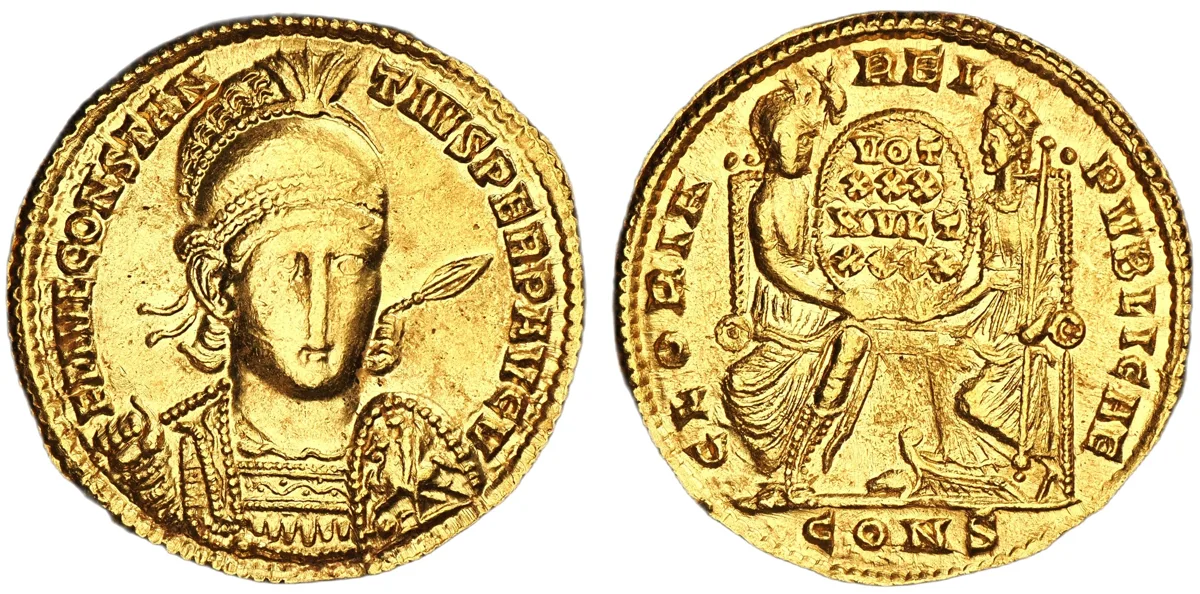
Constantius II. AD 337–361. AV Solidus (20 mm, 4.41 g, 6 h). Constantinople, AD 351–355. Obv. FL IVL CONSTAN-TIVS PERP AVGV, helmeted, pearl-diademed and cuirassed bust of Constantius II facing, head turned slightly right; holding spear over shoulder in right hand and shield on left shoulder, the shield decorated with a horseman galloping left and spearing a fallen enemy. Rev. GLORIA REI PVBLICAE, Roma, helmeted, seated facing on the left holding spear, and Constantinopolis, turreted, seated left with right foot on a prow, holding sceptre; between them a shield inscribed VOT / XXX / MVLT / XXXX; in exergue, CONS. RIC VIII Constantinople 96; Depeyrot 3/3. Extremely fine. This imposing solidus belongs to the central issues of Constantius II struck at Constantinople during the 350s, a decade marked by civil war and sustained frontier pressure. The obverse bust is among the most elaborate of the Constantinian dynasty, combining frontal presentation with martial attributes. The decorated shield, showing a mounted warrior spearing a fallen foe, evokes imperial victory and the emperor’s role as supreme military commander, while the helmet and spear reinforce his active, soldier-emperor image. The reverse presents a carefully balanced allegory of the Roman state. Roma and Constantinopolis, personifications of the old and new capitals, are shown seated together in concord, jointly supporting a shield inscribed with the vota for thirty years of rule and vows for forty. The type expresses both continuity and renewal: Rome’s ancient authority paired with the political centrality of Constantinople. The legend GLORIA REI PVBLICAE frames this imagery as a statement of restored and enduring public order. Solidi of this series were struck to a high standard and circulated as instruments of prestige, payment, and propaganda across the eastern empire. The present example preserves sharp detail in both the complex obverse armour and the finely articulated reverse figures, making it a strong representative of mid-fourth-century imperial gold coinage.