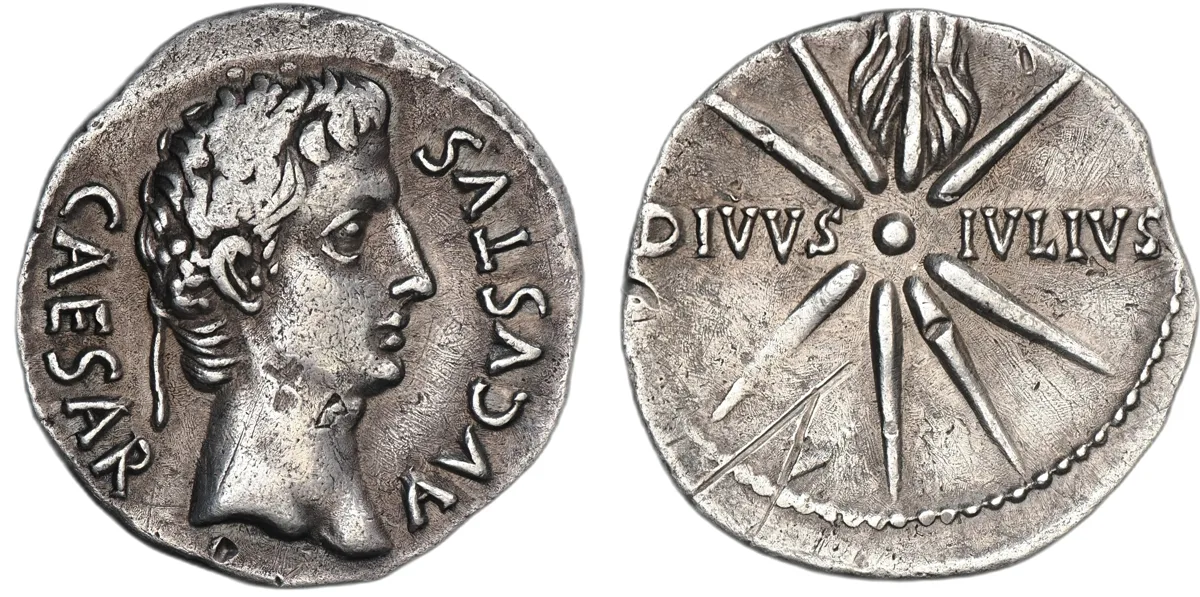
Augustus. 27 BC–AD 14. AR Denarius
Lot 340 · Consigned by GreatCoinsUSA
Closed
Description
Augustus. 27 BC–AD 14. AR Denarius (20 mm, 3.82 g, 6 h). Uncertain Spanish mint, possibly Colonia Patricia, 19–18 BC. Obv. CAESAR AVGVSTVS, head of Augustus right, wearing oak wreath. Rev. DIVVS IVLIVS, eight rayed comet with tail upward. BMC 323–325; Cohen 98; RIC I 37a. Some scratches and banker’s marks, otherwise very fine. Provenance: Ex Harlan J. Berk Buy or Bid Sale 182 (28 December 2012), lot 142; with an old collection ticket recording purchase from F. J. Reynolds in 1965.
This evocative denarius belongs to the Spanish series struck shortly after Augustus’ return from the western provinces and proclaims one of the most potent elements of early imperial ideology. The obverse presents Augustus crowned with the oak wreath, symbol of the corona civica, awarded for saving the lives of Roman citizens and emblematic of his role as protector and restorer of the state. The reverse depicts the celebrated comet of 44 BC, here explicitly identified as Divus Julius. According to contemporary belief, the comet that appeared during the games held in honor of Venus Genetrix signified the apotheosis of Julius Caesar. By advertising this celestial sign, Augustus reinforced his position as the adopted son of a deified ruler and grounded his authority in divine ancestry. Issues of this type, particularly those attributed to Spain, reflect the dissemination of Augustan ideology beyond Rome and into the provinces, where imagery of divine sanction and filial piety played a key role in legitimizing the new regime. Despite the modest surface marks typical of a coin that circulated widely, this example remains a clear and historically resonant witness to the formative years of the Principate.