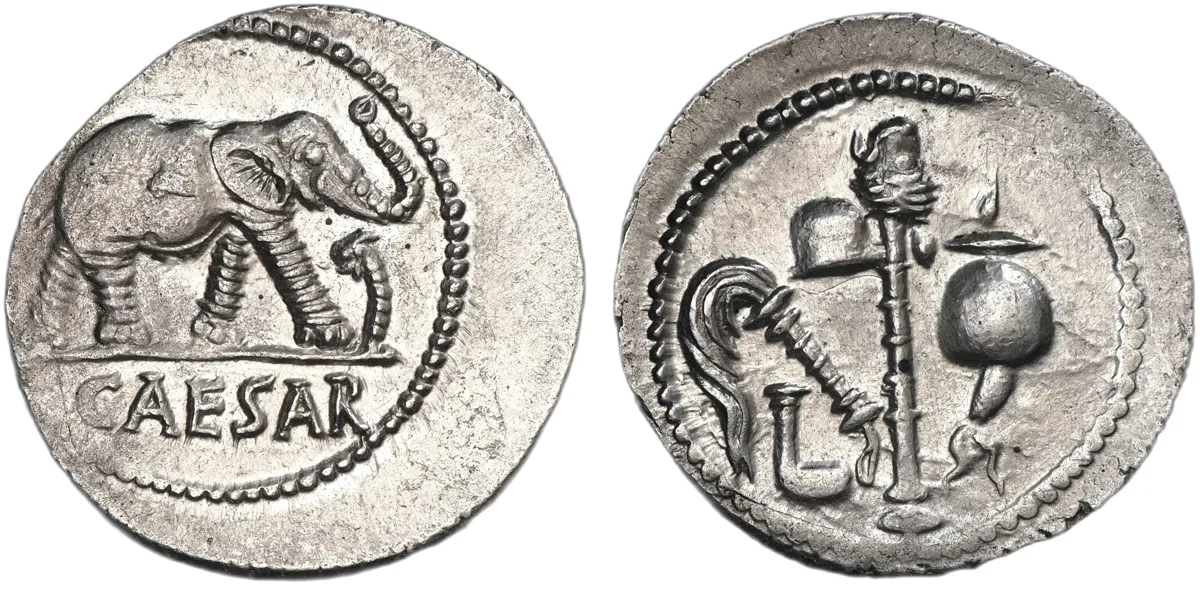
Julius Caesar. 49–44 BC. AR Denarius
Lot 328 · Consigned by GreatCoinsUSA
Closed
Description
Julius Caesar. 49–44 BC. AR Denarius (19 mm, 3.72 g, 12 h). Military mint moving with Caesar in Gallia Narbonensis or Hispania Citerior, 49–48 BC. Obv. CAESAR, elephant advancing right, trampling a horned serpent. Rev. Priestly implements: simpulum, aspergillum, securis surmounted by a wolf’s head, and apex. Babelon (Julia) 9; Cohen 49; Crawford 443/1; CRI 9; Sydenham 1006; RBW 1557. Slightly off centre with minor areas of weakness, otherwise extremely fine. Provenance: Ex Leu Web Auction 24 (3–6 December 2022), lot 2586.
One of the most iconic and symbolically charged denarii of the late Republic, struck at the outset of Caesar’s civil war. The obverse type of an elephant crushing a horned serpent has long invited interpretation. Most convincingly, the elephant represents Caesar himself, advancing with irresistible force, while the serpent symbolizes chaos, impiety, or the enemies of the Roman state. The stark simplicity of the design, dominated by the single name CAESAR, is unprecedented in Republican coinage and reflects the exceptional political moment in which it was produced. The reverse presents a carefully selected group of priestly implements, advertising Caesar’s position as pontifex maximus. In contrast to the aggressive imagery of the obverse, this side emphasizes religious legitimacy, tradition, and lawful authority, reinforcing Caesar’s claim that his actions were sanctioned by Rome’s most ancient institutions. Struck as portable military silver to pay Caesar’s legions during the opening campaigns of 49–48 BC, this denarius circulated widely and rapidly, ensuring maximum exposure for its powerful message. Combining stark visual impact with profound ideological content, it stands among the most important numismatic documents of the collapse of the Roman Republic.