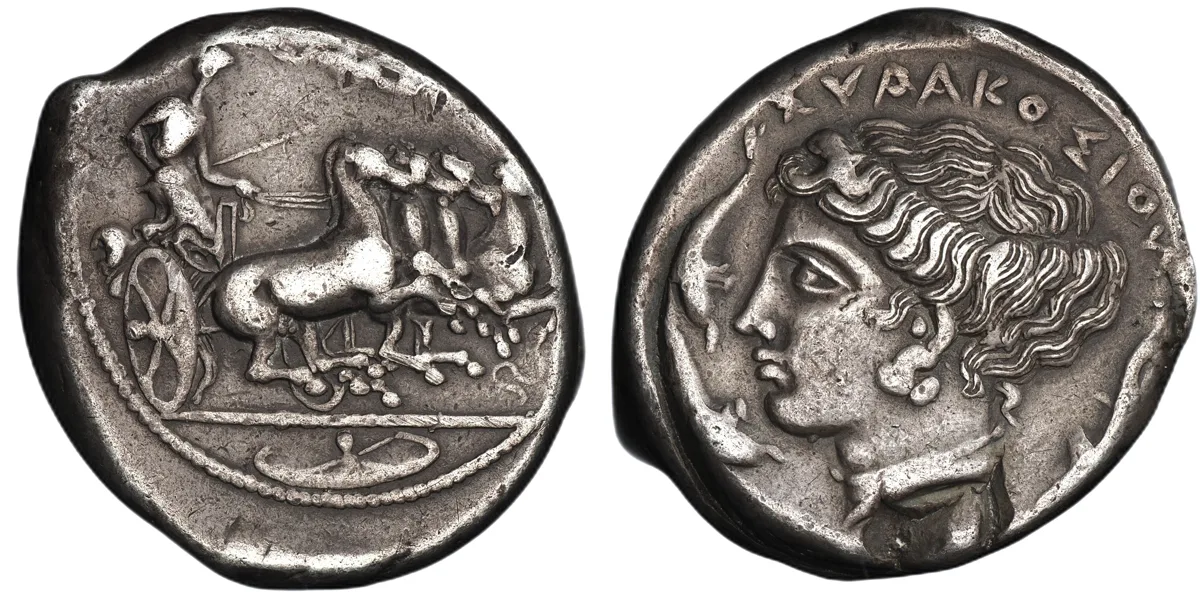
Sicily, Syracuse. Tetradrachm. Euainetos & Eukleidas signed.
Lot 030 · Consigned by GreatCoinsUSA
Closed
Description
Sicily, Syracuse. Second Democracy, 466–405 BC. AR Tetradrachm. Obverse die signed by Euainetos, reverse by Eukleidas, circa 415–406 BC. Obv. Charioteer driving galloping quadriga right, holding kentron in right hand and reins in both; above, Nike flying right to crown the charioteer; in exergue, wheel; on exergual line, [EYAINETO]. Rev. Head of Arethousa left, wearing earring and necklace; EV below; four dolphins around. AR 17.24 g, 26 mm. Fischer-Bossert, Coins 36p (O12/R19); SNG ANS 265 (same dies); HGC 2, 1330; SNG Lockett 964 (same dies); BMC 151 (same dies). Extremely rare. A masterpiece of late classical style with a superb portrait. Hair re-engraved on the reverse. About extremely fine. Ex Santamaria, February 1958, lot 999.
One of the great signed masterpieces of the Syracusan Second Democracy, this tetradrachm unites the names of Euainetos on the obverse and Eukleidas on the reverse and stands among the most celebrated artistic collaborations in Greek numismatics. The obverse shows a powerful galloping quadriga, rendered with exceptional fluency and control, Nike sweeping in to crown the victorious charioteer while the neat wheel in the exergue and the discreet signature on the line anchor the composition in both space and authorship. On the reverse, the head of Arethousa is a work of pure late classical refinement. The nymph’s features are modelled with exquisite subtlety, the hair arranged in soft, carefully articulated strands, her jewellery delicately indicated. The dolphins that encircle her are perfectly placed to enhance the rhythm of the design without disturbing the serenity of the central portrait, and the modest EV beneath confirms the hand of Eukleidas. Struck in the years around the Athenian expedition to Sicily and the subsequent struggles of Syracuse for survival and supremacy, pieces of this quality and signature are of the highest rarity and desirability. This specimen, struck on a broad flan and graced with a superbly engraved portrait, is a distinguished example of the finest period of Sicilian die engraving.