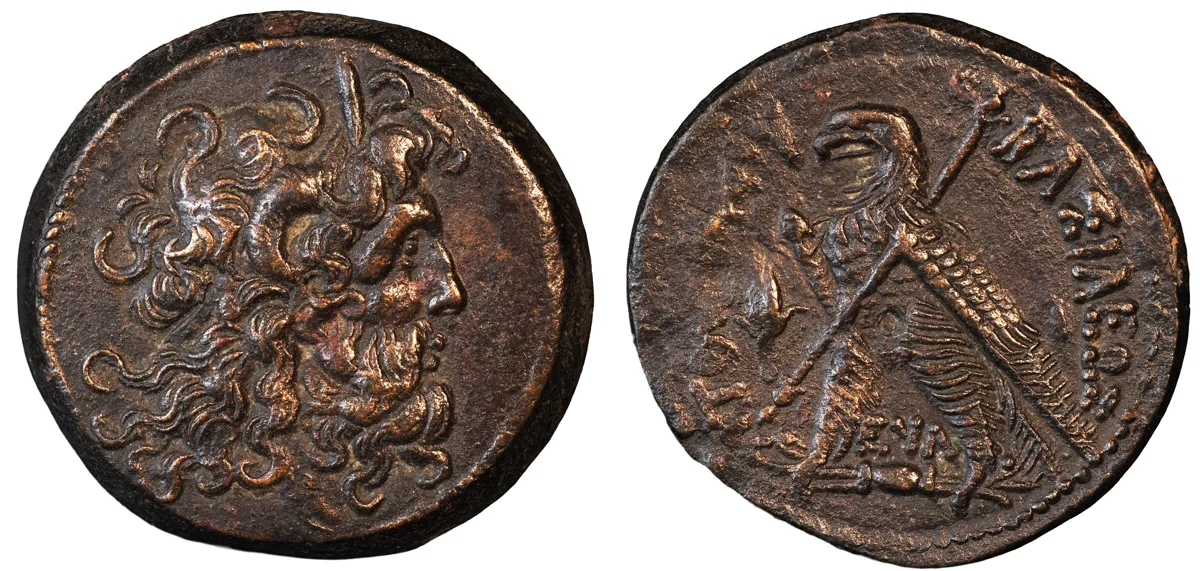
PTOLEMAIC KINGDOM. Ptolemy IV Philopator, 225-205 BC. Æ Diobol
Lot 120 · Consigned by hhf
Closed
Description
PTOLEMAIC KINGDOM. Ptolemy IV Philopator, 225-205 BC. Æ Diobol (32 mm, 23.15 g, 12 h). Alexandria, ca. 220/19-205 BC. Obv. Diademed head of Zeus Ammon right, a ram’s horn curling over the diadem; luxuriant, flowing hair and beard. Rev. ΒΑΣΙΛΕΩΣ ΠΤΟΛΕΜΑΙΟΥ – Eagle with wings closed standing left on thunderbolt; over shoulder, filleted double cornucopia brimming with fruit; between the legs, control mark ΣYA. Refs. CPE B506; Svoronos 1151; SNG Copenhagen 213. Warm chocolate-brown patina with reddish highlights, exceptionally sharp for the large bronze module; fine detail in the curls of Zeus and the eagle’s plumage.
The massive bronze coinage of Ptolemy IV reflects both the prosperity and the strains of a kingdom at its zenith. By pairing the dynastic eagle with the ram-horned Zeus Ammon, an icon that linked the Ptolemies to Alexander’s divine legitimacy, Philopator projected continuity amid growing internal weakness. During these very years, the king won the great Battle of Raphia (217 BC) against Antiochos III, yet court intrigues and lavish building projects soon eroded royal authority. Heavy diobols like this supplied Egypt’s bustling marketplaces and paid the increasingly Greek and native Egyptian troops who assured Philopator’s victory. Their broad flans gave engravers room for a virtuoso portrait of Zeus Ammon, while the ΣYA control mark ties the piece to one of the carefully regulated bronze issues that kept Alexandria’s economy humming even as the empire’s political fortunes began their long decline.