Mysia, Lampsakos. EL Stater
Lot 109 · Consigned by NumisOne
Closed
Description
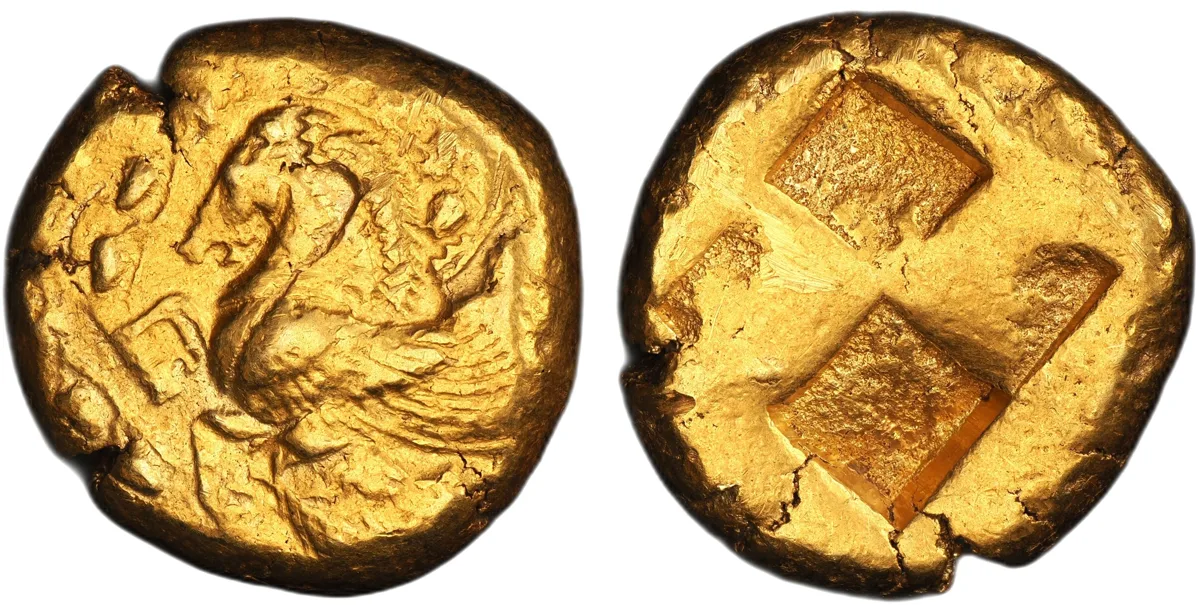
Mysia, Lampsakos. EL Stater, circa 500–450 BC. Obv. Forepart of Pegasos left, surrounded by a grapevine. Rev. Quadripartite incuse square. 20 mm, 15.27 g, 11 h. Baldwin, Period I, Group II, 10; BMFA 1582; SNG Paris 1111.
An attractive example, well centred and sharply struck. Struck in the Archaic period, this electrum stater of Lampsakos belongs to one of the earliest coinages of the city, issued at a time when Lampsakos was emerging as a prosperous trading centre on the Hellespont. The forepart of Pegasos, gracefully modelled and set within a framing grapevine, reflects both mythological symbolism and local identity. The vine may allude to the region’s renowned viticulture, while Pegasos serves as a heroic and protective emblem with wide resonance throughout the Greek world. The reverse bears the typical quadripartite incuse, characteristic of early electrum issues across the northern Aegean. This simple but authoritative punch marks the coin as the product of a formal civic mint during the formative decades of Greek monetary culture. Lampsakene electrum staters of the Period I groups are of considerable rarity and historical interest, representing a key stage in the evolution of Greek coinage when cities experimented with distinctive civic types and established the visual language of their future monetary systems. A well preserved and elegant specimen of this important early series.