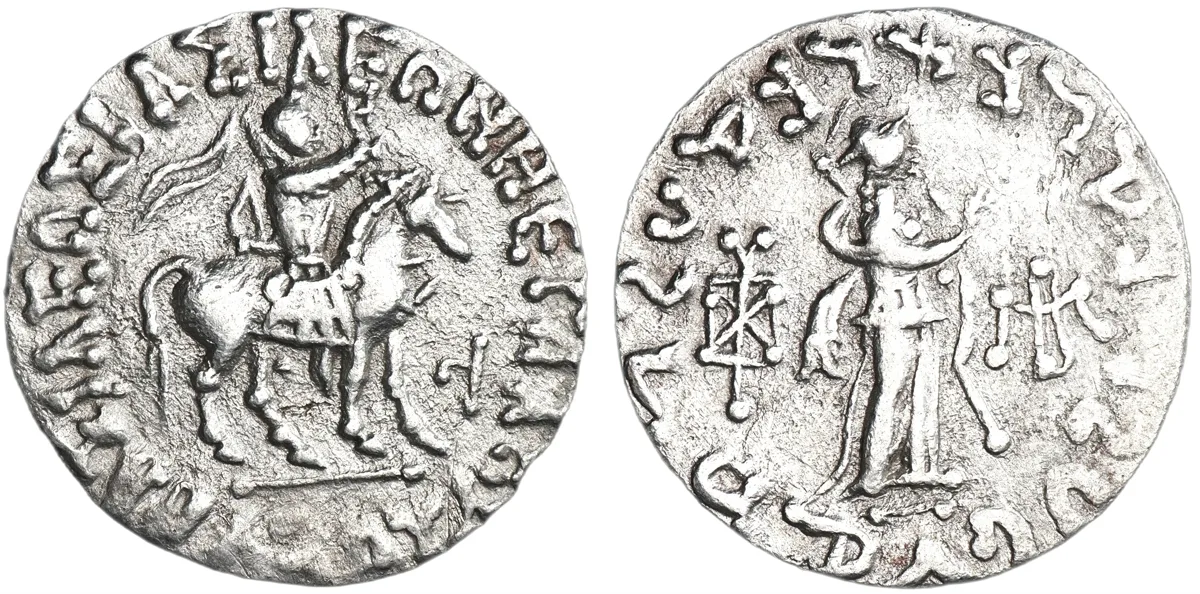
Azes II, Tetradrachm, silver, reign 35–12 BC
Lot 240 · Consigned by hhf
Closed
Description
Azes II, Tetradrachm, silver, reign 35–12 BC; struck 35–12 BC, 9.11 g, 24 mm. Uncertain mint in the northwestern Indian subcontinent. Obverse: BAΣIΛEΩΣ BAΣIΛEΩN MEΓAΛOY AZOY; the king on horseback right, in cataphract armor, holding a whip aloft; Kharosthi control letter da before the horse. Reverse: Kharosthi legend MAHARAJASA RAJADIRAJASA MAHATASA AYASA; Pallas Athene standing right, holding spear and shield, right arm extended; monogram in left field; Kharosthi control letter va in right field. Struck on a round flan, dies aligned 12h; centering complete for types, minor peripheral softness typical of the series. References: monogram not matched in the standard corpora; compare Senior, Indo-Scythian Coins and History II, Azes II tetradrachms (Athena/horseman type); Mitchiner, Indo-Greek and Indo-Scythian Coins 793–812; MACW 4111–4139. Historical significance: The bilingual Greek–Kharosthi coinage of Azes II documents the transition from Indo-Greek to Indo-Scythian rule in Gandhara and the Punjab. The equestrian ruler type and the Greek deity Athene continue Hellenistic numismatic conventions while addressing local audiences through Kharosthi legends. The royal style “King of Kings” asserts supra-regional authority, and the systematic use of field letters and monograms indicates organized mint administration. These issues circulated widely and provided models for later Kushan monetary iconography and legends.