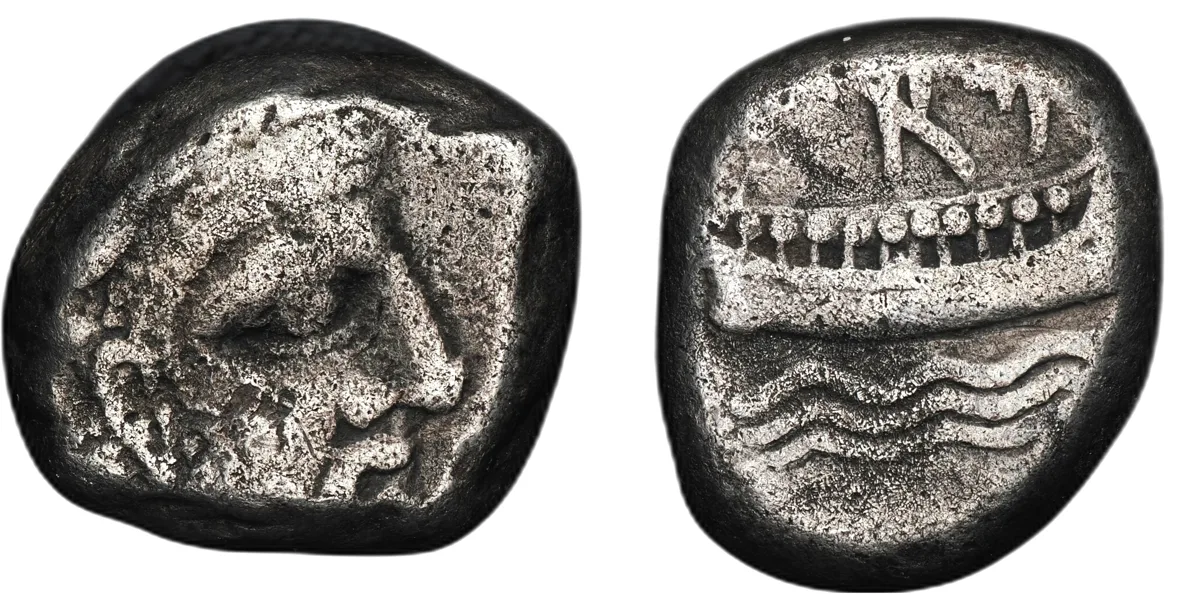
Phoenicia, Arados. Silver Stater.
Lot 145 · Consigned by NumisOne
Closed
Description
Phoenicia, Arados. Silver Stater. Circa 370–346 BC. Obv. Laureate head of Baal right. Rev. War galley sailing right over stylized waves; Pataikos standing on prow. 10.48 g; 22 mm. HGC 10, 35. Beautiful cabinet tone, well centered, struck on a broad flan.
Struck on the Phoenician standard at the Arados mint, this stater belongs to one of the most distinctive and historically significant coinages of the eastern Mediterranean in the late Achaemenid period. The obverse portrays the local god Baal, protector and patron of the city, depicted with a noble and serene expression in the classical style of the 4th century BC. The reverse type of the war galley symbolizes Arados’ maritime strength and economic identity, for the city’s prosperity rested on its formidable fleet and extensive trade network. The small figure on the prow is the Pataikos, a protective Egyptian dwarf-deity associated with warding off evil. Its appearance here is a remarkable testament to the cultural syncretism of the Levant, where Egyptian, Persian, and Hellenic artistic influences merged within Phoenician tradition. The stylized waves beneath the hull provide one of the earliest naturalistic renderings of the sea on ancient coinage, emphasizing both motion and mastery over the element that defined Arados’ existence. As an island city off the Syrian coast (modern Arwad), Arados held a key position under Achaemenid suzerainty, maintaining relative autonomy in exchange for naval service. Its silver staters, circulating broadly along the coastal trade routes, were among the dominant coinages of the Phoenician monetary system and served as a model for later issues across the region. A coin of refined artistry and exceptional historical resonance, encapsulating the maritime power, religious devotion, and cosmopolitan character of Phoenician Arados during the height of its influence.