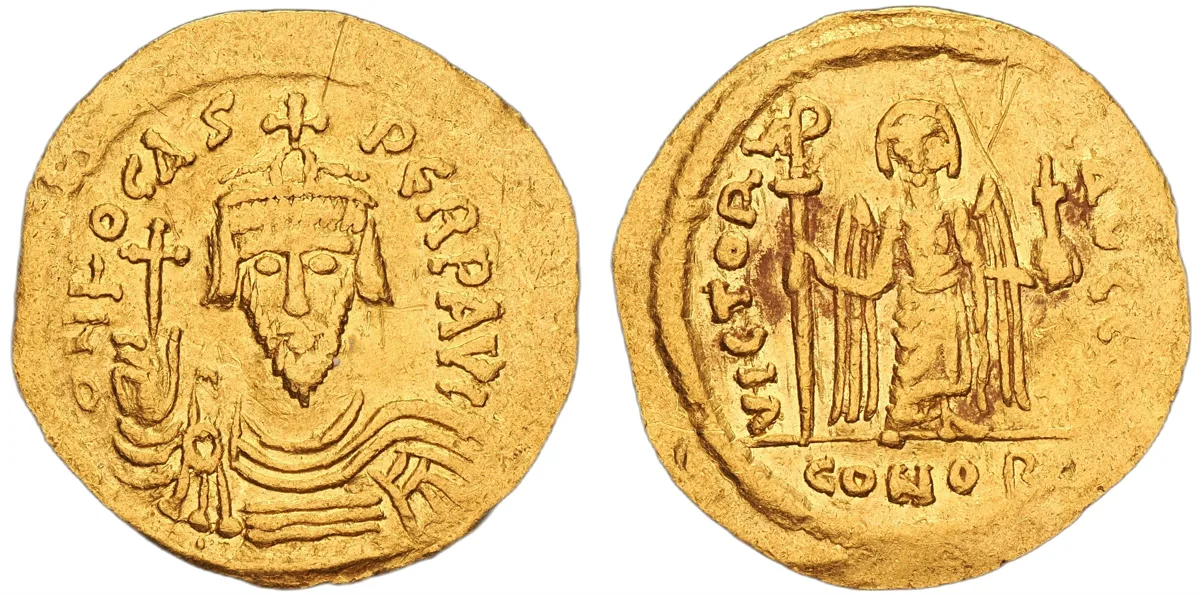
Phocas. 602–610. Solidus
Lot 630 · Consigned by NumisOne
Closed
Description
Phocas. 602–610. Solidus (Gold, 21 mm, 4.45 g, 6 h). Constantinople, 603–607. Obv. D N FOCAS PЄRP AVC, draped and cuirassed bust of Phocas facing, wearing crown surmounted by cross, holding globus cruciger in right hand. Rev. VICTORIA AVGЧ Є / CONOB, angel standing facing, holding globus cruciger in left hand and long staff surmounted by staurogram in right. DOC 5e; MIB 7; SB 618. Choice surfaces, lightly toned, struck in high relief. Extremely fine.
A handsome solidus struck early in the reign of Phocas, the centurion who seized the Byzantine throne in 602 following the mutiny of the Balkan army and the overthrow of Emperor Maurice. His accession marked the beginning of one of the most turbulent decades in Byzantine history, characterized by civil strife, heavy taxation, and the resurgence of the Sassanian Persian threat. The portrait of Phocas is immediately distinctive within the Byzantine series: the thick beard, heavy features, and direct frontal gaze reflect a deliberate departure from the refined imperial portraits of the sixth century, signaling the elevation of a soldier-emperor rather than a court aristocrat. The crown topped by a cross and the globus cruciger in his hand proclaim divine sanction and universal dominion under Christ, continuing the theocratic imagery that had become central to imperial ideology. On the reverse, the standing angel replaces the traditional Victory, symbolizing the transformation of the empire’s pagan iconography into Christian form. The staurogram-topped staff emphasizes the triumph of the cross, while the inscription VICTORIA AVGЧ maintains the traditional language of imperial success. Though Phocas’ rule was brief and brutal—ending with his overthrow by Heraclius in 610—his coinage remains of great historical importance. It reflects a period of transition in both art and ideology, as the Byzantine Empire moved from late Roman conventions toward the distinctly medieval aesthetic of its later centuries.