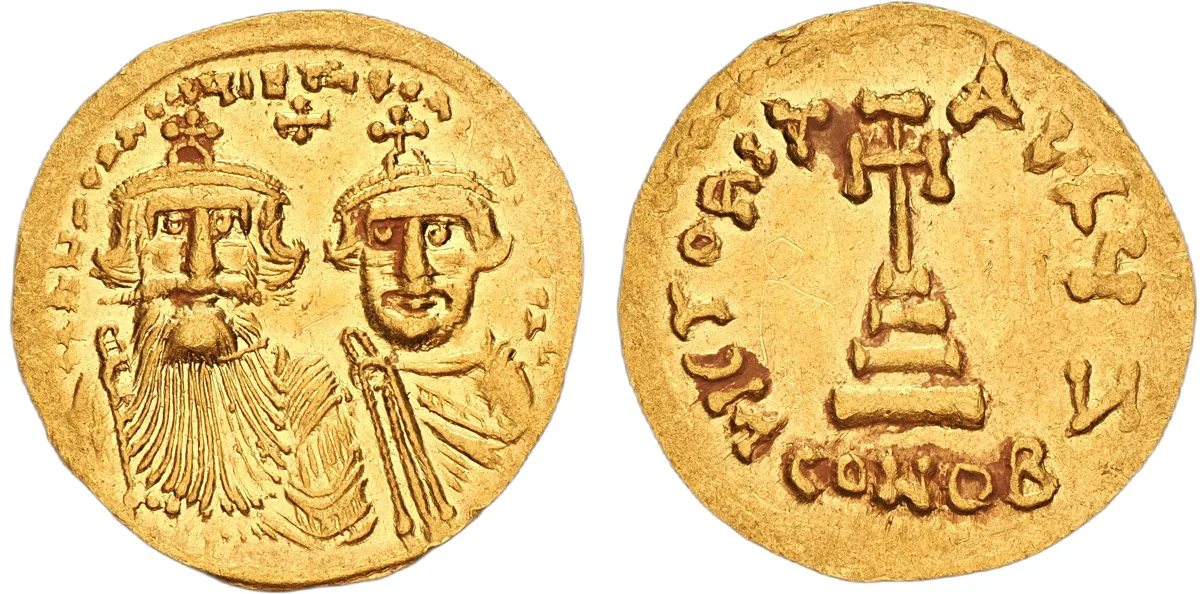
Heraclius, with Heraclius Constantine. 610–641. Solidus
Lot 633 · Consigned by NumisOne
Closed
Description
Heraclius, with Heraclius Constantine. 610–641. Solidus (Gold, 20 mm, 4.39 g, 6 h). Constantinople, circa 629–631. Obv. dd NN hЄRACLIЧS ЄT hЄRA CONST PP AV, crowned and draped busts of Heraclius and Heraclius Constantine facing; Heraclius on the left, with long beard and whiskers, his son on the right, bearded and moustached; cross above. Rev. VICTORIA AVGЧ Z / CONOB, cross potent on base and three steps. DOC 26g; MIB 29; SB 749. Slightly clipped, with light scratches, faint graffiti, and a small die break on the obverse, otherwise about extremely fine.
Struck during the later years of Heraclius’ reign, this solidus marks a crucial phase in Byzantine history when the empire was emerging from the long and devastating wars against the Sassanian Persians. By circa 629, Heraclius had achieved his celebrated victory, reclaiming the True Cross and restoring imperial prestige after years of military crisis. The obverse presents a powerful dynastic image of the emperor and his eldest son, Heraclius Constantine, symbolizing stability and continuity after decades of turbulence. Their paired busts beneath the cross convey both the divine sanction of their rule and the unity of father and heir, a theme central to Heraclius’ propaganda during the restoration of the empire’s fortunes. The reverse type, the cross potent on steps, embodies the triumph of the Christian empire, commemorating both the recovery of Jerusalem and the reassertion of Byzantine orthodoxy. Its austere and monumental simplicity stands as a spiritual counterpoint to the martial and political struggles that defined Heraclius’ reign. A well-preserved and historically resonant example of the Constantinopolitan gold coinage from one of Byzantium’s most eventful and transformative reigns.