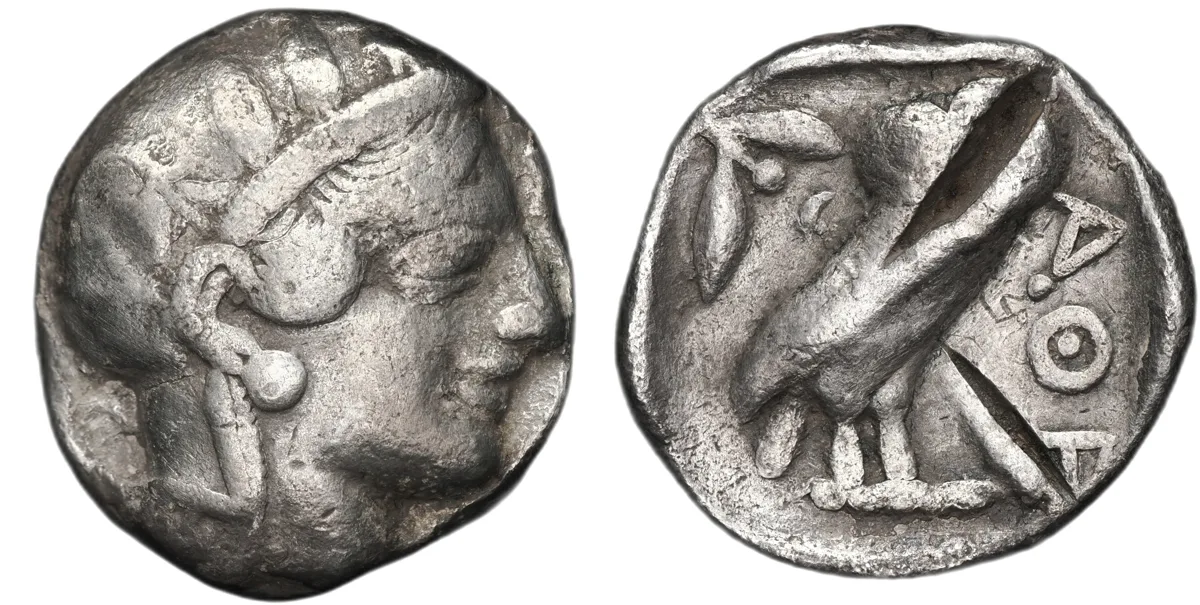
Attica, Athens, AR Tetradrachm, ca. 454-404 BC.
Lot 092 · Consigned by hhf
Closed
Description
Attica, Athens, AR Tetradrachm, ca. 454-404 BC. 24 mm. Classical “owl” issue. Helmeted head of Athena right, the crested Attic helmet adorned with three olive leaves above the visor and a spiral palmette on the bowl, wearing a round earring and pearl necklace; rev. ΑΘΕ, owl standing right, head facing, olive-sprig and crescent behind, all within incuse square. Kroll 8; Dewing 1591-8; SNG Copenhagen 31; HGC 4, 1597. Struck soon after Athens transferred the Delian League treasury from Delos to the Acropolis in 454 BC, this tetradrachm embodies the financial sinews of the city’s Golden Age. Revenue from the Laurion silver mines and from allied tribute was turned into millions of such pieces, financing Perikles’ vast building program—including the Parthenon whose sculptor Pheidias also redesigned Athena’s portrait for the coinage—and underwriting the long Peloponnesian War against Sparta. The design remained unchanged for almost a century, creating a trademark so trusted that “owls” became the hard currency of the Aegean, Egypt, and the Near East; contemporary inscriptions even quote prices in ἀθηναῖοι τετράδραχμοι as a universal unit of account. The coin’s iconography neatly advertises Athens’ civic identity and maritime reach. Athena, patron of wisdom and warfare, faces outward like the prow of a trireme, while her night-sighted owl—perched beside the crescent moon and the ever-fertile olive—assured merchants that Athenian silver was as reliable in the dark of foreign markets as in the daylight of the Agora. In consequence, the tetradrachm became the first coin to circulate on a truly international scale, laying the monetary foundation on which Alexander and the Hellenistic kingdoms would later build.