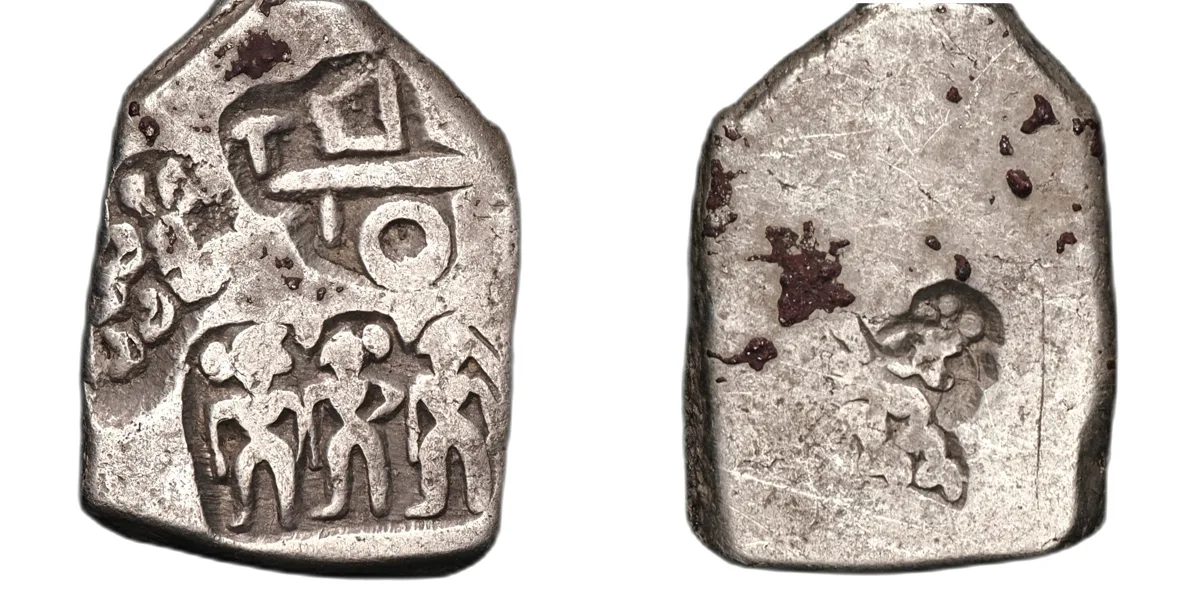
Mauryan Empire, AR Karshapana, c. 4th–2nd century BC
Lot 204 · Consigned by hhf
Closed
Description
Mauryan Empire, AR Karshapana, silver, c. 4th–2nd century BC; 21 mm; uncertain mint. Anepigraphic; obverse with three standing human figures rendered as a single punch (“three men as single punch”) in the lower field, accompanied by a peacock standing on a hill and ancillary symbols. Reverse anepigraphic with a single peacock-on-hill punch. Irregular rectangular flan with multiple-punch manufacture typical of the series, punches well impressed. Recorded in Zeno 193760. The silver karshapana was the standard monetary unit of the Mauryan state, struck by punching official symbols into prepared silver sheets at a weight around 3.4 g, enabling wide circulation across northern and central South Asia. The peacock motif, frequent on Mauryan issues and often interpreted as a dynastic emblem, reflects state authority on a coinage system that standardized weights and facilitated imperial administration and interregional trade during the 4th–2nd centuries BC.