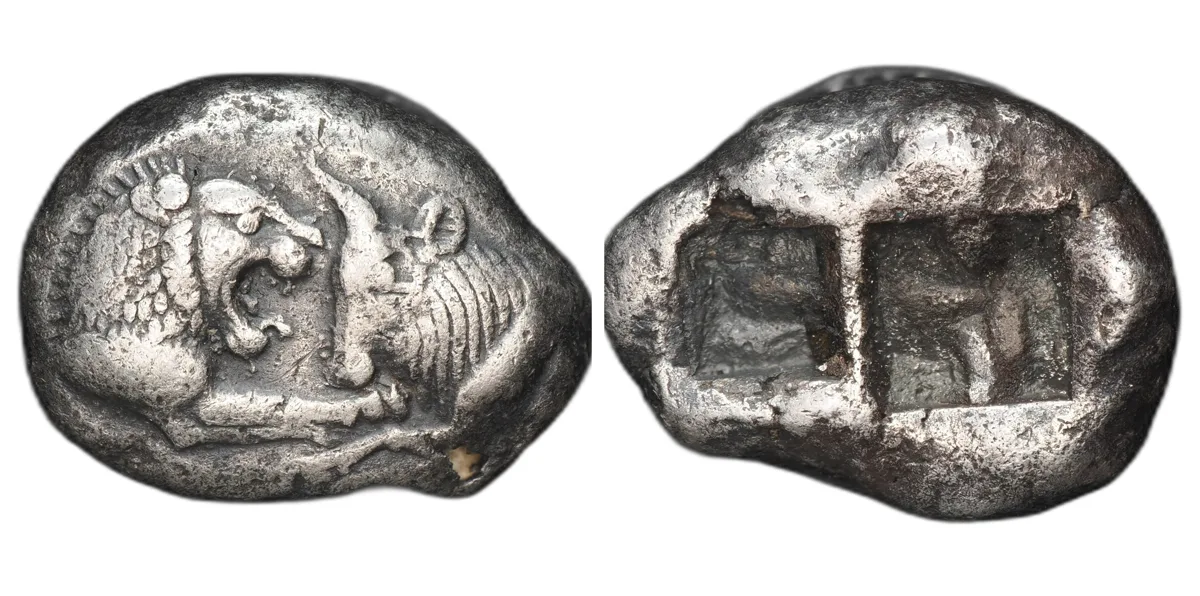
KINGS of LYDIA. Kroisos. Circa 564/3–550/39 BC. AR Stater
Lot 130 · Consigned by GreatCoinsUSA
Closed
Description
KINGS of LYDIA. Kroisos. Circa 564/3–550/39 BC. AR Stater (10.41 g, 21.5 mm). Sardes mint. Obv. Confronted foreparts of lion and bull. Rev. Two incuse squares. Berk 20; Kurth S1; Traité I, 407–8; SNG Ashmolean 760. Lightly toned, typical granular surfaces, minor scrape on obverse. From a german collection formed in the 1960s.
Struck at Sardes during the reign of Kroisos, the last great king of Lydia, this stater marks one of the most significant milestones in the history of coinage. Under his rule, the long Lydian tradition of electrum issues gave way to the world’s first true bimetallic system in gold and silver, establishing a standard that would influence the monetary economies of the Greek and Persian worlds alike. The obverse design of the lion confronting the bull is among the most enduring motifs of archaic Asia Minor. It is generally interpreted as a symbolic expression of cosmic and dynastic balance: the lion, emblem of royal authority and the solar principle, representing Alyattes, father of Kroisos; the bull, lunar in character, symbolising the youthful energy and renewal embodied by his son and successor. The stark and powerful rendering of the paired beasts reflects both Eastern artistic tradition and the emerging Greek naturalism of the sixth century BC. Kroisos’ wealth and fate became the stuff of legend, immortalised by Herodotus and later Greek writers. His consultation of the Delphic Oracle before his fateful war with Cyrus the Great, and the ambiguous prophecy that “if he crossed the Halys he would destroy a great empire,” serve as one of antiquity’s most enduring moral parables. The defeat and fall of Lydia in 546 BC brought the end of its independence, but its coinage—refined in weight, artistry, and metal purity—set the template for the monetary systems of the Achaemenid Empire and classical Greece. A historically pivotal and artistically imposing piece, representing the very birth of state-issued precious metal coinage and the enduring legacy of Kroisos, the archetype of ancient wealth.