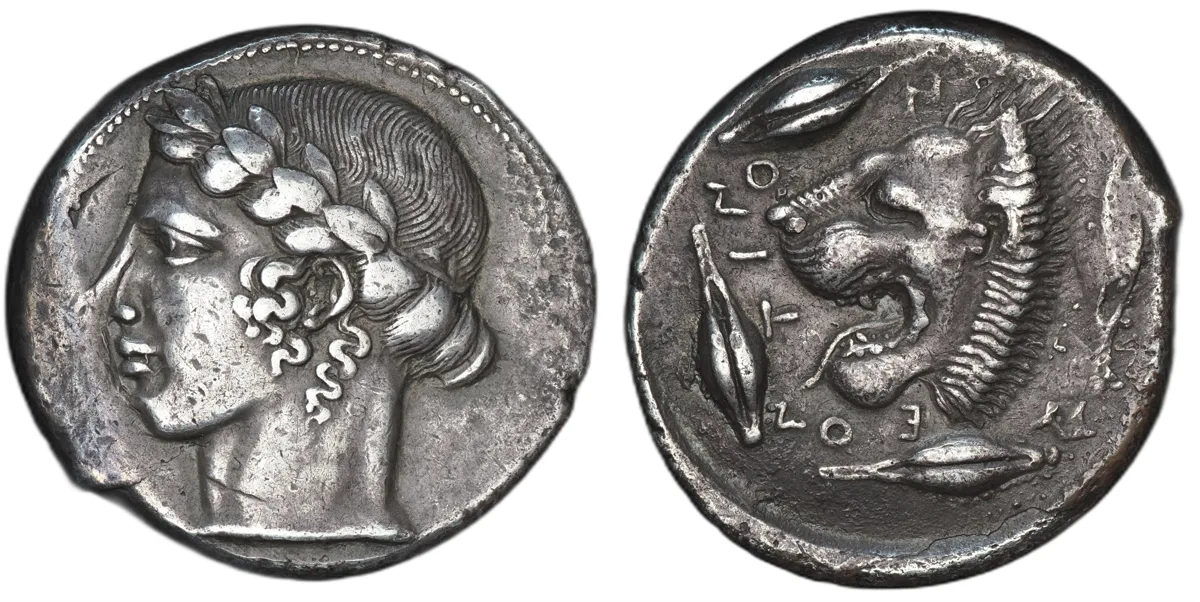
Sicily, Leontinoi. Tetradrachm
Lot 019 · Consigned by GreatCoinsUSA
Closed
Description
Sicily, Leontinoi. Tetradrachm. Circa 455–430 BC. Obv. Laureate head of Apollo left, his hair falling in natural locks, the features rendered with refined early classical balance. Rev. ΛΕΟΝΤΙΝΩΝ, lion’s head left with jaws open; four barley grains around. 17.14 g. SNG Copenhagen 349 var.; SNG ANS 234; HGC 2, 668. Attractive dark cabinet tone. Obverse with light striking mark. Ex Gerhard Hirsch Nachf. 328 (2017), lot 33.
This elegant tetradrachm of Leontinoi, a city of southeastern Sicily near Syracuse, belongs to the mature classical phase of the island’s coinage. The obverse features Apollo, the city’s tutelary deity, whose cult was closely associated with the Delphic traditions that shaped much of Sicilian religious life. His serene profile, framed by soft curls and a laurel wreath, reflects the ideals of harmony and proportion that define early classical art. The reverse presents a roaring lion’s head, surrounded by four barley grains—a direct visual pun on the city’s name, derived from leon (lion) and its agricultural prosperity. The symbolism of the lion conveys strength and civic pride, while the barley alludes to the fertility of the plains surrounding Leontinoi, known in antiquity for their rich grain production. The artistry is characteristic of mid-fifth-century Sicilian engraving: powerful yet disciplined, with a strong sense of symmetry and naturalism. Coins of this series formed part of the broader wave of numismatic innovation that swept Sicily during the fifth century BC, when local mints achieved an extraordinary balance between technical perfection and expressive design. The high-relief engraving and subtle toning of this specimen emphasize its sculptural quality, recalling the same artistic milieu that produced the masterpieces of Syracuse and Katane. A particularly handsome and well-preserved example, combining aesthetic refinement with an unmistakable sense of local identity, emblematic of the cultural flowering of Greek Sicily in the classical period.