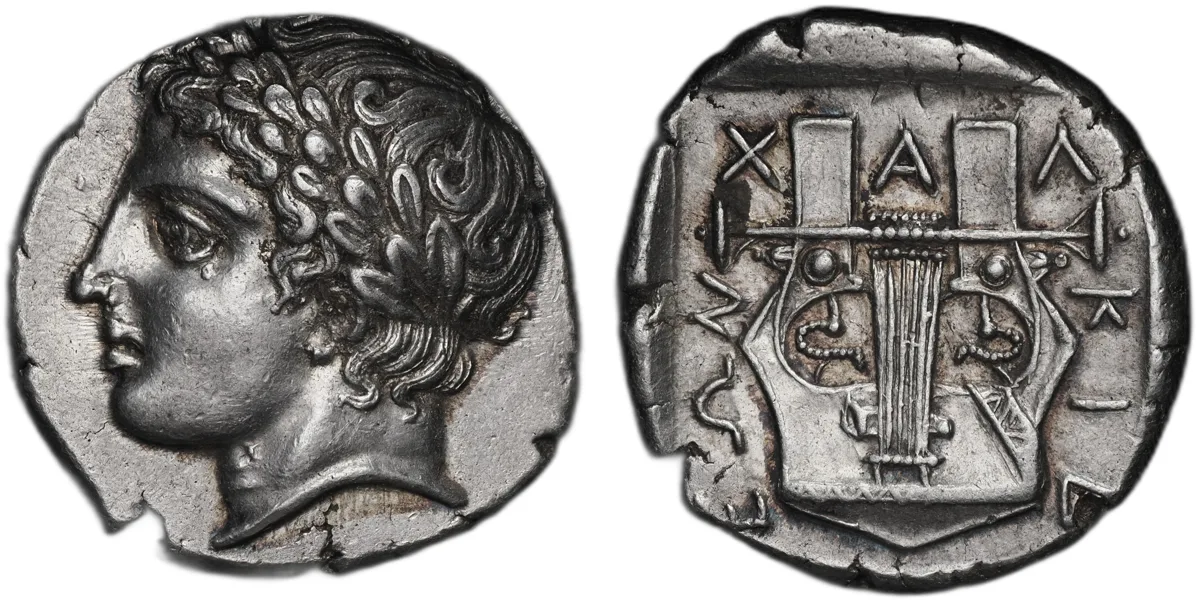
Macedonia, Olynthos. Tetradrachm. Circa 433–348 BC.
Lot 035 · Consigned by GreatCoinsUSA
Closed
Description
Macedonia, Olynthos. Tetradrachm. Circa 433–348 BC. Obv. Laureate head of Apollo Olynthios left, with finely detailed hair and serene expression. Rev. ΧΑΛΚΙΔΕΩΝ, lyre with six strings, all within shallow incuse. 14.43 g. SNG ANS 473 ff. var. Ex Gerhard Hirsch Nachf. 298 (2014), lot 158.
his beautifully executed tetradrachm was struck at Olynthos, the capital of the Chalcidian League, an alliance of the Greek cities of the Chalcidice peninsula formed in the early fifth century BC. Under Olynthian leadership, the League grew in power and prosperity, establishing its own coinage in silver that reflected a unified political and cultural identity. The coinage of Olynthos, particularly its issues bearing the head of Apollo, stands among the finest artistic achievements of northern Greece in the classical period. The obverse presents the god Apollo Olynthios, the principal deity of the city, portrayed in an idealized yet gentle style that captures the refined aesthetic of late classical sculpture. His laurel wreath and calm expression evoke divine harmony and the intellectual and artistic flourishing that characterized the Chalcidian League at its height. The high relief and precision of the engraving suggest the work of a master engraver closely connected to the artistic trends of contemporary Macedon and southern Greece. The reverse type with the lyre, symbolizing Apollo’s musical aspect, reinforces the god’s patronage of art, music, and civic unity. The ethnic ΧΑΛΚΙΔΕΩΝ (“of the Chalcidians”) proclaims the collective authority of the League rather than that of Olynthos alone, reflecting the city’s leadership over its allied poleis. The League’s prosperity and autonomy inevitably brought it into conflict with the rising power of Macedon. In 348 BC, after a series of campaigns, Philip II captured and destroyed Olynthos, dissolving the League and incorporating its territories into the Macedonian kingdom. The Apollo type of Olynthos would, however, endure in influence: the head of the god on these tetradrachms directly inspired the portrait on Philip II’s famous gold staters, the Philippeioi, ensuring that the artistic legacy of Olynthos continued long after its fall. A superb and historically resonant coin, distinguished by its refined style and the clarity of its strike, emblematic of the political strength and artistic refinement of the Chalcidian League in its final century.