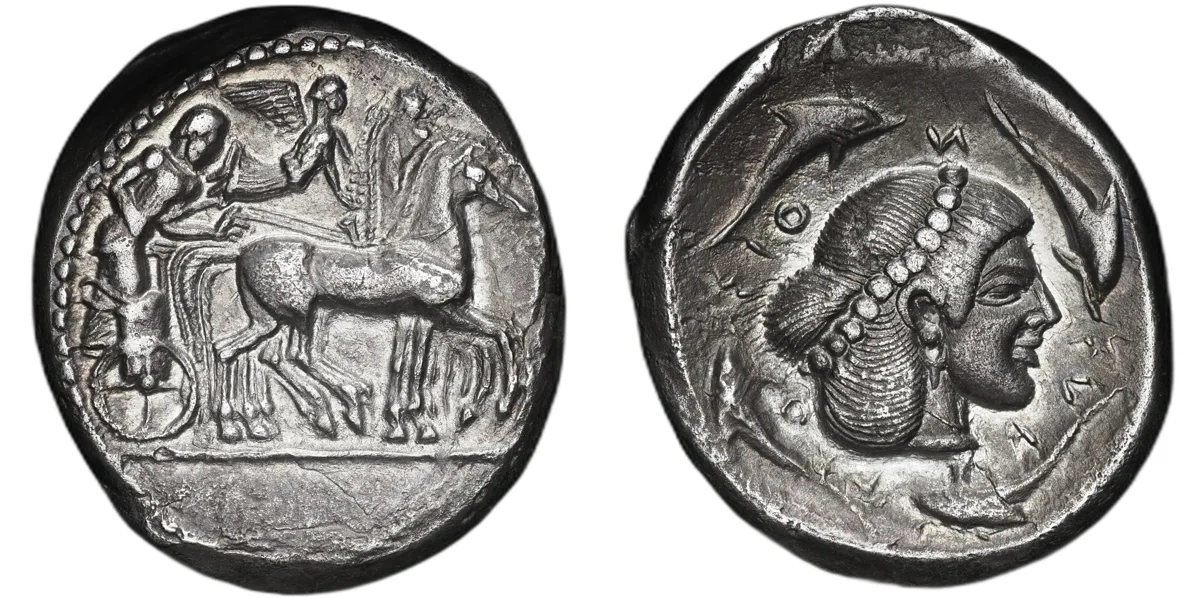
Sicily, Syracuse. Tetradrachm. Circa 485–479 BC.
Lot 020 · Consigned by GreatCoinsUSA
Closed
Description
Sicily, Syracuse. Tetradrachm. Circa 485–479 BC. Obv. Quadriga driven right by charioteer, holding reins and kentron; above, Nike flies left to crown the team. Rev. ΣΥΡΑΚΟΣΙΟΝ, head of Arethusa right, wearing hairband and necklace, surrounded by four dolphins. 16.62 g. Boehringer 321. Attractive cabinet tone. Struck in high relief. Ex Dr. Busso Peus Nachf. 415 (2015), lot 58.
This magnificent early classical tetradrachm of Syracuse exemplifies the fully developed style of the city’s archaic-to-classical transition and the artistic vigor of the Deinomenid period. The obverse presents a masterfully composed quadriga, the charioteer driving right as Nike descends to crown the victorious team. The composition, animated yet disciplined, captures the dynamic energy of the race while maintaining the balanced harmony characteristic of the finest Sicilian engraving of the early fifth century. The reverse depicts the nymph Arethusa, the divine protector of the spring that bore her name on the island of Ortygia. Her head is adorned with a simple hairband and necklace, her features idealized yet retaining a distinctly human grace. The four dolphins circling her serve both as a symbol of Syracuse’s maritime prosperity and as an allusion to her mythic connection with the sea. The high-relief engraving and confident linework reflect the technical and aesthetic mastery that made Syracusan die engravers preeminent throughout the Greek world. Struck during the era of Gelon’s rule, when Syracuse emerged as the dominant power in Sicily, these tetradrachms served as both currency and civic monument, celebrating victory, fertility, and divine favor. The harmony of composition and precision of detail on this piece reveal the early evolution of the artistic traditions that would culminate, a few decades later, in the signed masterpieces of Kimon and Euainetos. An exemplary coin of early classical Syracuse, distinguished by its refined artistry, balanced design, and deep historical resonance within the golden age of Sicilian numismatics.