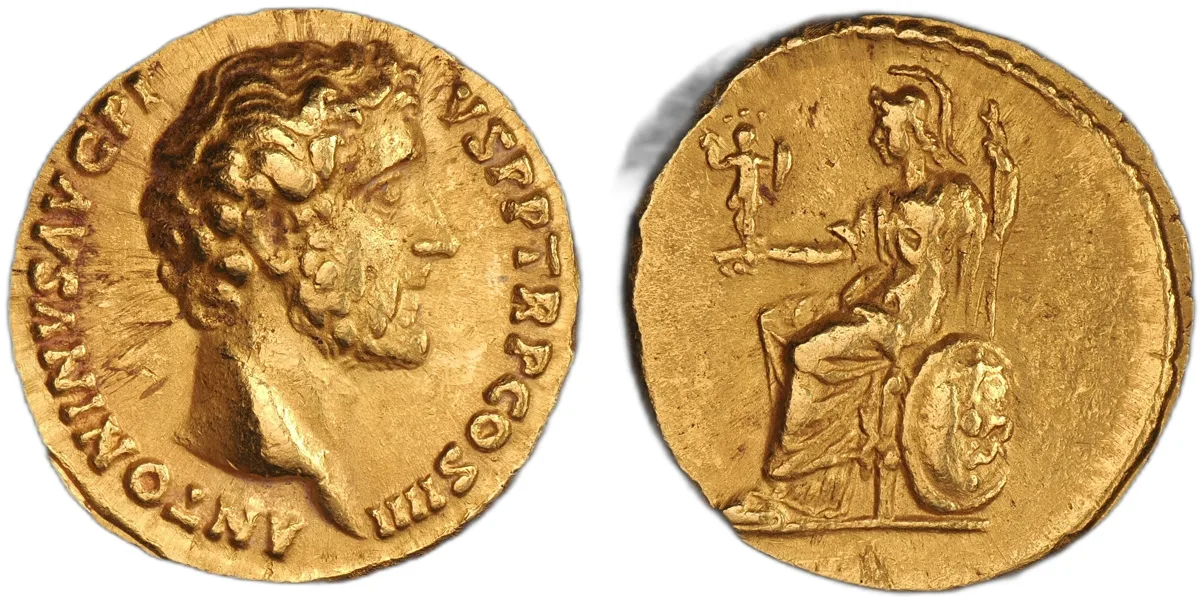
Antoninus Pius, 138-161, Aureus
Lot 364 · Consigned by hhf
Closed
Description
Antoninus Pius. Aureus. Rome, AD 145–161.
Obv. ANTONINVS AVG PIVS P P TR P COS IIII, laureate head of Antoninus Pius right.
Rev. ROMA, Roma, helmeted and draped, seated left, holding palladium on extended right hand and spear upright in left; oval shield set on ground to right.
7.23 g. 19 mm. RIC III 159a; obv. die match to Noble Numismatics 122 (2019), lot 3008.
A beautifully executed aureus of Antoninus Pius struck at Rome during the later years of his reign, a period remembered for its peace, prosperity, and administrative stability. The obverse portrait presents the emperor in the full maturity of his rule, his features rendered with a noble calm that epitomizes the restrained dignity of Antonine portraiture. The inclusion of P P (Pater Patriae) affirms his status as “Father of the Fatherland,” a title conferred in AD 139, while COS IIII records his fourth consulship beginning in AD 145. The refined engraving and consistent die alignment reflect the technical precision of the imperial mint at its height.
The reverse, depicting Roma enthroned and holding the palladium, carries a message deeply rooted in Roman civic and religious ideology. The palladium, the ancient image of Pallas Athena said to have protected Troy and later Rome itself, symbolizes divine guardianship over the empire and its eternal destiny. Roma, here rendered in serene majesty, embodies the virtues of stability, courage, and divine sanction that characterized the Antonine era. The shield resting at her side and the vertical spear underscore the concept of peace maintained through preparedness, a central theme of Antonine propaganda.
Gold aurei of this period served not only as high-value currency but also as instruments of imperial communication, circulating among provincial governors, senatorial elites, and the military as tangible affirmations of the emperor’s authority. Their imagery was carefully chosen to project ideals of continuity and divine favor at a time when the empire’s frontiers remained secure and its institutions functioned with remarkable efficiency.
A coin of exceptional style and preservation, struck at a moment when the Antonine principate represented the pinnacle of Roman order and prosperity. The graceful composition and balanced symbolism of the Roma type stand among the most refined expressions of second-century imperial ideology.