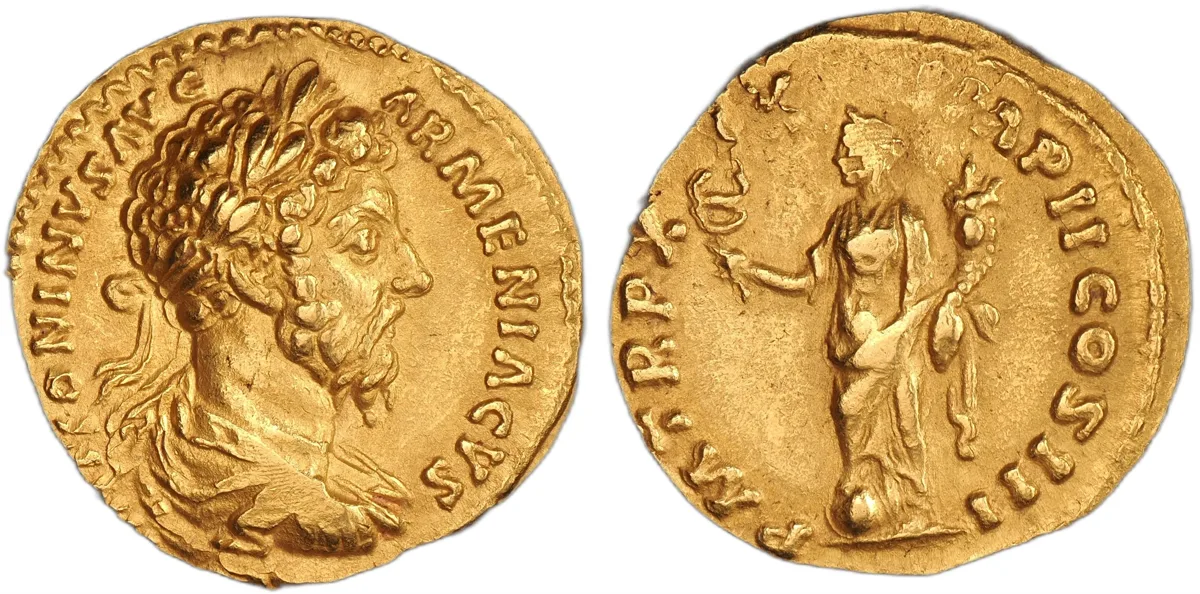
Marcus Aurelius, 161-180, Aureus
Lot 377 · Consigned by hhf
Closed
Description
Marcus Aurelius. Aureus. Rome, AD 165–166.
Obv. ANTONINVS AVG ARMENIACVS, laureate head of Marcus Aurelius right.
Rev. P M TR P XIX IMP II COS III, Victory standing left, holding wreath and palm.
7.14 g. 19 mm. RIC III 131; Calicó 1824; BMCRE 332; Cohen 471.
This aureus belongs to the Armeniacus series struck at Rome in the middle years of the reign, celebrating the Roman victory in the Parthian War. Although Marcus Aurelius himself remained in Rome, the campaign was conducted under his co-emperor Lucius Verus. The Roman forces, led by generals such as Avidius Cassius, achieved a decisive success in Armenia and Mesopotamia, reinstalling the client king Sohaemus and reaffirming imperial authority across the eastern frontier.
Marcus assumed the title Armeniacus in AD 163, and this issue, bearing the tribunician number XIX, can be dated precisely to AD 165–166. The legend IMP II refers to his second imperatorial acclamation, while COS III marks his third consulship, held jointly with Verus. The reverse depiction of Victory advancing with wreath and palm symbolizes divine favor and the just triumph of the emperor, themes that recur throughout the imperial coinage of the Antonine age.
Coins of this series were issued in large numbers, forming part of a sustained propaganda effort that emphasized the restoration of Roman supremacy in the East. The elegant artistry of the portrait presents Marcus Aurelius with the calm and idealized features that came to define his later iconography. The serenity of his expression reflects the philosopher-emperor’s temperament, contrasting with the more overtly martial imagery of earlier emperors.
The issue was struck at a turning point in the reign. Within a few years the Antonine Plague, likely brought westward by returning legions, would sweep through the empire and devastate its population. The temporary peace secured in the East would soon give way to the Marcomannic Wars on the Danubian frontier. This aureus therefore stands as a monument to a brief moment of triumph before the onset of the crises that would test the endurance of both the emperor and the empire.