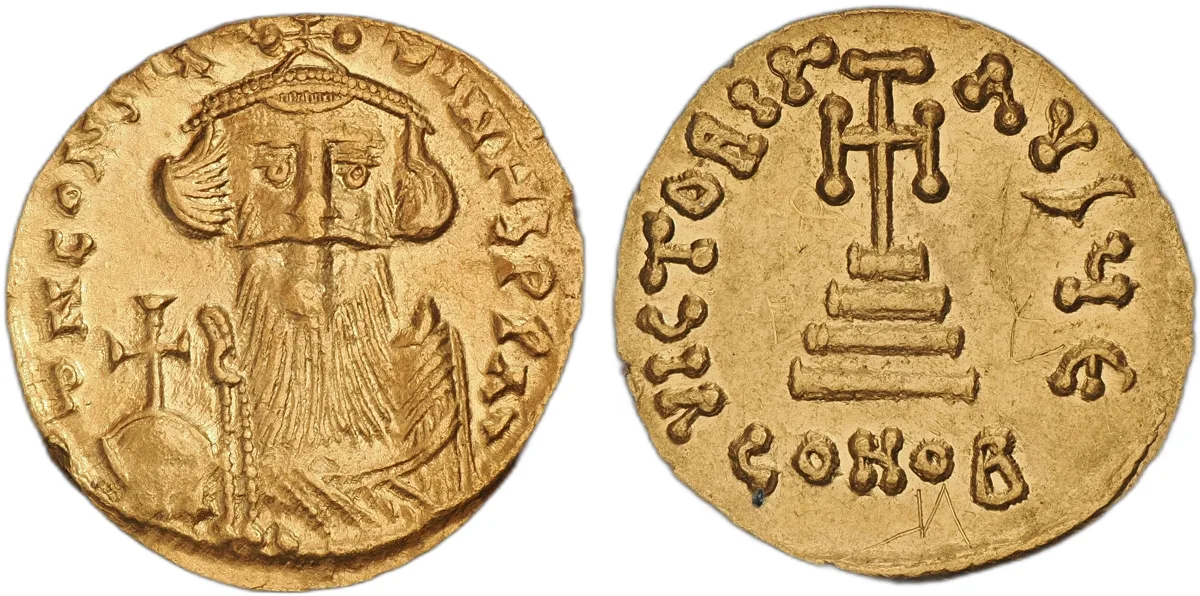
Constans II, AD 641–668. AV Solidus
Lot 636 · Consigned by NumisOne
Closed
Description
Constans II, AD 641–668. AV Solidus (20 mm, 4.43 g, 6 h). Constantinople mint, AD 651–654. Obv. d N CONSTANTINЧS P P AV. Crowned and draped bust of Constans II facing, long beard and moustache, holding globus cruciger in right hand. Rev. VICTORIA AVGЧ ϵ // CONOB. Cross potent set upon three steps. Refs. DOC 19e; MIB 23; Sear Byz. 956.
Struck a decade into the reign of Constans II, this solidus presents the emperor frontally in the fully developed ceremonial idiom of the seventh century: crowned, draped, and bearing the globus cruciger, the orb-and-cross that proclaims Christ’s dominion mediated through the emperor. The distinctive long beard—so familiar from his gold and copper series—became an icon of the reign (medieval sources later transferred the nickname Pogonatus, “the Bearded,” to his son Constantine IV, but the coin portraits leave no doubt about Constans’ own luxuriant facial hair). The reverse replaces the old personification of Victory with a stark, hieratic cross potent on steps, a visual confession of faith that had become standard since Heraclius’ recovery of the True Cross. The legend VICTORIA AVGG (in plural, “of the emperors”) perpetuates classical formulae while the design signals a consciously Christian triumph. In exergue, CONOB guarantees good Constantinopolitan gold; the officina letter ϵ marks the fifth workshop of the mint. Historically, these years sit within the first, hard phase of the Arab–Byzantine wars. Constans stabilised the monetary system and maintained the prestige of the solidus even as the empire yielded Syria and Egypt and fought bitterly for Armenia and the sea-lanes. His coinage projects continuity and divine mandate amid crisis—a programme he would later carry west when he shifted his court to Syracuse in 662 in a bid to re-centre imperial power. A classic, sharply legible Constantinople solidus of Constans II, marrying clear titulature and an austere Christian reverse with the unmistakable, long-bearded imperial portrait that defines the series—an instructive and highly collectable example of mid-seventh-century Byzantine state imagery.