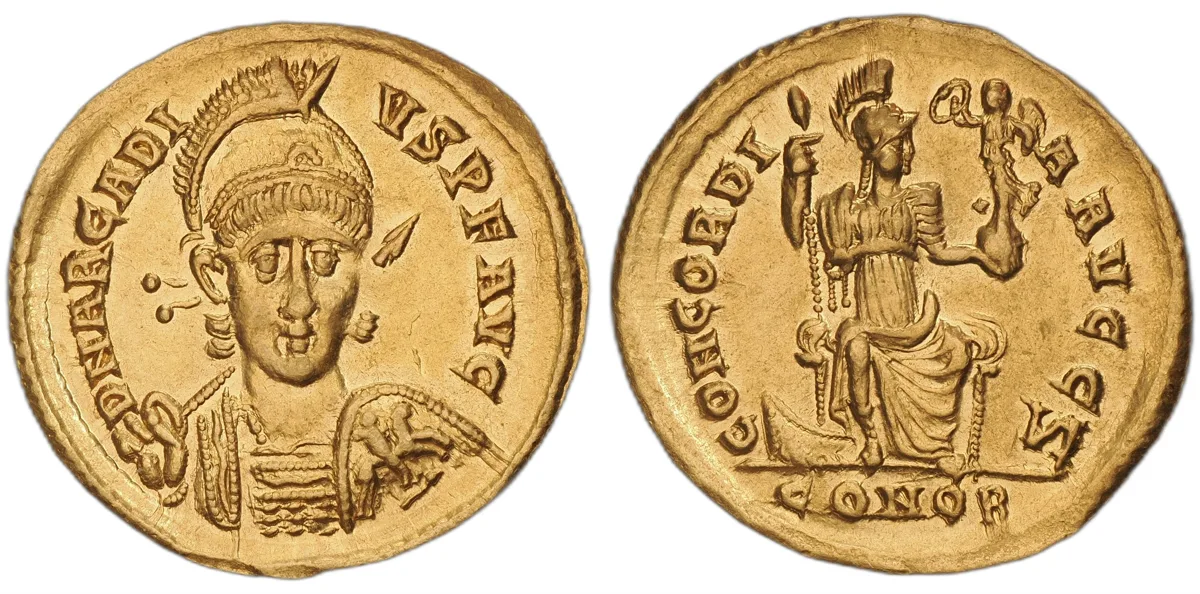
Arcadius, AD 383–408. AV Solidus
Lot 609 · Consigned by NumisOne
Closed
Description
Arcadius, AD 383–408. AV Solidus (21 mm, 4.44 g, 6 h). Constantinople mint, AD 395–402.
Obv. D N ARCADI-VS P F AVG. Helmeted, pearl-diademed and cuirassed bust of Arcadius facing, head turned slightly right, holding spear over shoulder in right hand; shield on left shoulder decorated with a horseman spearing a fallen foe.
Rev. CONCORDI-A AVGG Ϛ / CONOB. Constantinopolis, helmeted, seated facing on a throne, head right, holding sceptre in right hand and Victory on globe in left; right foot set upon a prow.
Refs. Depeyrot 55/1; RIC X Constantinople 7.
Struck in the early years after the death of Theodosius I (AD 395), this handsome Constantinopolitan solidus presents Arcadius in the fully developed iconography of the Christian soldier-emperor. The facing martial bust—helmeted, armoured, and bearing both spear and shield—draws on Constantinian victory imagery; the shield device of a mounted horseman dispatching a foe encapsulates the ideal of imperial protection at a time when the eastern court strove to project stability amid frontier pressures and court intrigue. The careful engraving of the cuirass, diadem pearls, and spear butt is characteristic of the refined hand of the capital’s workshops in the closing years of the 4th century.
The reverse type, CONCORDIA AVGG, proclaims harmony within the imperial college and, more broadly, the ordered concord of the Roman world under divine favour. Personified Constantinopolis, helmeted and enthroned, rests her foot on a ship’s prow—an eloquent reminder of the city’s maritime destiny and its command of the Bosporus sea-lanes—while she balances the Victory on globe against the sceptre of rule. The exergual CONOB mark guarantees good Constantinopolitan gold; the officina letter Ϛ (Zeta) situates the piece within the internal organisation of the mint, whose output under Arcadius is notable for clear legends, neat module, and disciplined relief.
Politically, the period AD 395–402 saw the consolidation of the eastern administration under Arcadius and his ministers, the tightening of fiscal and legal structures, and the continued embedding of Christian imperial vocabulary in state art and coinage. Gold solidi like this one functioned as both premium pay and portable propaganda, their conservative types reassuring in a world of changing generals, court factions, and shifting federate treaties.