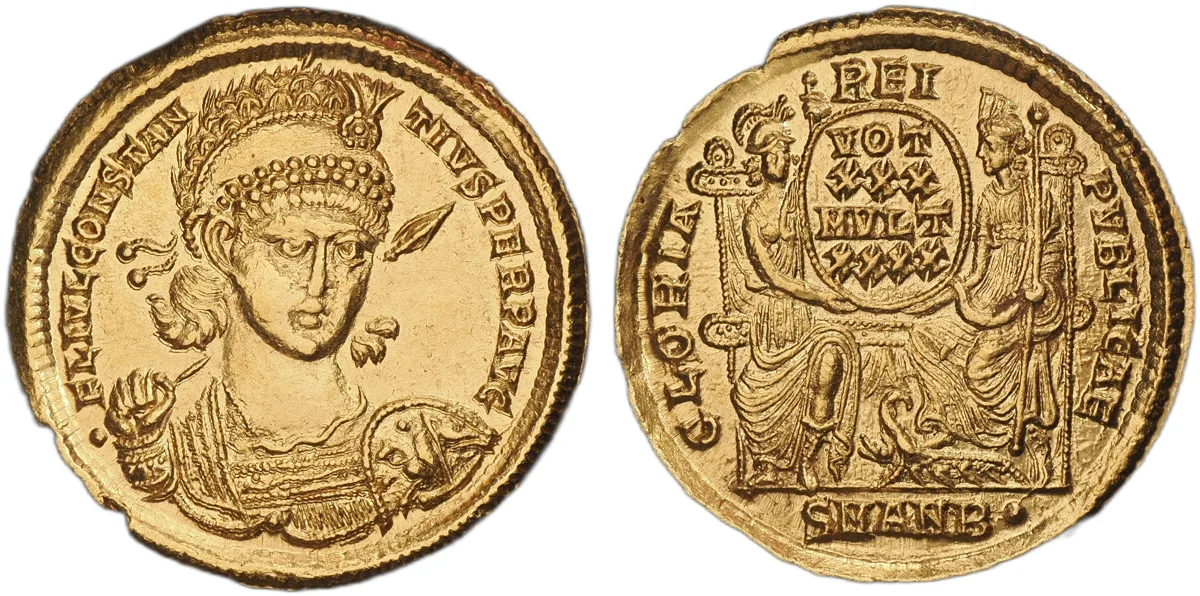
Constantius II, AD 337–361. AV Solidus
Lot 583 · Consigned by NumisOne
Closed
Description
Constantius II, AD 337–361. AV Solidus (21 mm, 4.45 g, 6 h). Antioch mint, AD 355–361. Obv. FL IVL CONSTAN-TIVS PERP AVG. Helmeted, pearl-diademed and cuirassed bust of Constantius II facing, head very slightly right, holding spear over shoulder; on the left shoulder a shield decorated with a horseman galloping left, spearing a fallen foe. Rev. GLORIA REI PVBLICAE / SMANB•. Roma, helmeted, seated facing left, holding spear; to right, Constantinopolis, turreted, seated left with right foot set on prow, holding sceptre; between them a shield inscribed VOT / XXX / MVLT / XXXX. Refs. Depeyrot 9/1; RIC VIII Antioch 162. A splendid Antiochene solidus from the mature phase of Constantius II’s reign, combining one of the most imposing late Roman bust types with the emblematic Roma–Constantinopolis reverse. The obverse presents the emperor in fully martial guise—helmeted, in cuirass and paludamentum, grasping the spear and bearing a shield charged with the classic equestrian triumph scene. This obverse composition, with its layered military iconography, encapsulates Constantius’ self-presentation as the vigilant imperator Christianus, defender of frontiers and arbiter of orthodoxy. The reverse legend GLORIA REI PVBLICAE celebrates the “glory of the Commonwealth,” here personified by the twin capitals: Roma, heir to ancestral virtue, and Constantinopolis, the maritime bastion of the new Christian empire. Between them they support a vota shield marking the tricennial vows (VOT XXX) with prayers for the quadragenarian (MVLT XXXX), a formula that projects dynastic longevity and divine favour. The Antioch mintmark SMANB• situates the issue within the mint’s second officina series; Antioch’s engravers of this period are noted for their disciplined linear style, crisp lettering, and clean, even fabric—qualities amply displayed here. Historically, these years saw Constantius consolidate control of the eastern provinces, maintain pressure on Persia, and refine the ceremonial and visual language of Christian rulership inherited from Constantine. Gold solidi such as this served not merely as high-value payments to officers and officials but as portable declarations of imperial ideology—order, concord, and perpetual victory secured under divine sanction. Condition: Lustrous and very well centred with an impressive military bust; only the faintest trace of die wear on the obverse, otherwise virtually as struck.