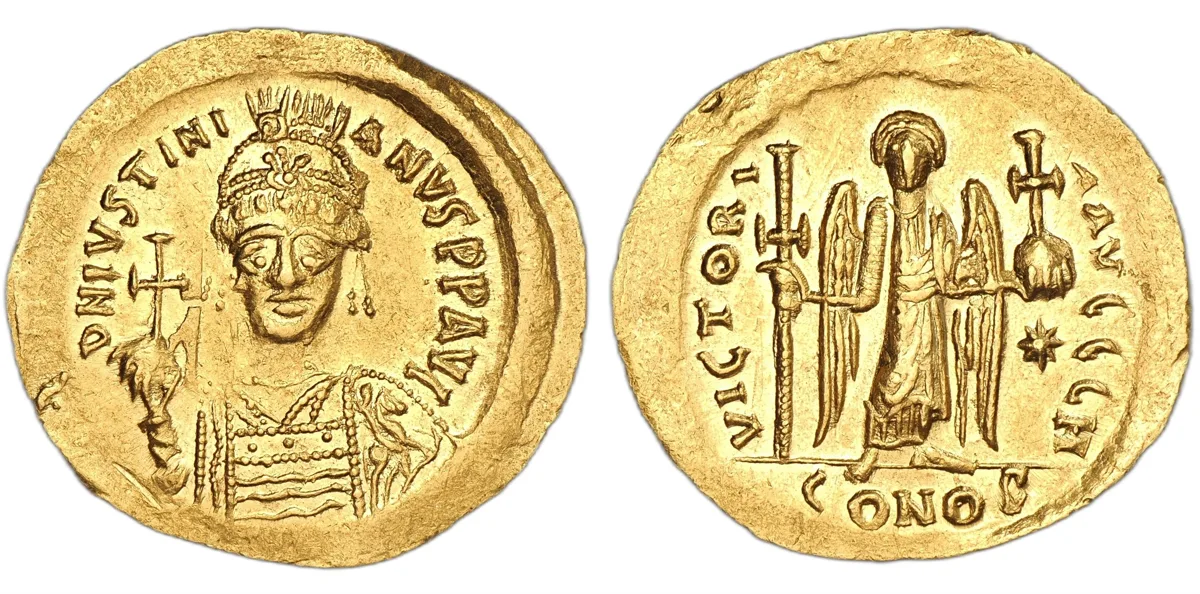
Justinian I, AD 527–565. AV Solidus
Lot 620 · Consigned by NumisOne
Closed
Description
Justinian I, AD 527–565. AV Solidus (21 mm, 4.48 g, 6 h). Constantinople mint, circa AD 537–542.
Obv. D N IVSTINI–ANVS P P AVG. Pearl-diademed, helmeted and cuirassed bust of Justinian facing, holding globus cruciger in right hand; shield over left shoulder decorated with a horseman spearing a fallen foe.
Rev. VICTORI-A AVGGG / Ḥ (officina H) // CONOB. Angel standing facing, holding long jewelled cross in right hand and globus cruciger in left; star in right field.
Refs. DOC 8f; MIBE 6; Sear Byz. 139.
Struck in the early prime of Justinian’s reign, this classic Constantinopolitan solidus presents the fully developed imperial imagery of the sixth century. The facing, martial portrait—helmeted, cuirassed and grasping the globus cruciger—projects the emperor as imperator Christianus, guardian of both empire and faith. The shield device showing a charging horseman over a fallen enemy reprises Constantinian victory iconography, reframed here as a timeless emblem of Roman order prevailing over chaos.
The reverse replaces the late Roman Victory with a standing Angel, a signal transformation of imperial symbolism under the Christian empire. The Angel’s long jewelled cross functions as a triumphal standard of the True Faith, while the globus cruciger echoes the orb in the emperor’s hand, visually binding heavenly mandate to earthly sovereignty. The legend VICTORIA AVGGG (“the victory of the emperors”) preserves the traditional plural while asserting the enduring success of the imperial office; the star in the field adds a celestial accent of providence. In exergue, CONOB guarantees good Constantinopolitan gold, and the officina letter H marks the eighth workshop of the capital mint at a time when Constantinople was the beating heart of imperial bullion coinage.
Historically, the years c. 537–542 span some of the most consequential moments of Justinian’s programme: the completion and dedication of Hagia Sophia (537), Belisarius’ reconquest of Rome and much of Italy, and the codification projects culminating in the Corpus Iuris Civilis—monuments of architecture, arms and law that defined the Byzantine vision of a restored Roman world. The coin’s austere dignity and technical precision—crisp lettering, firm relief, and balanced composition—embody the confidence of an age that sought to reunite the Mediterranean under a single imperial and spiritual authority.