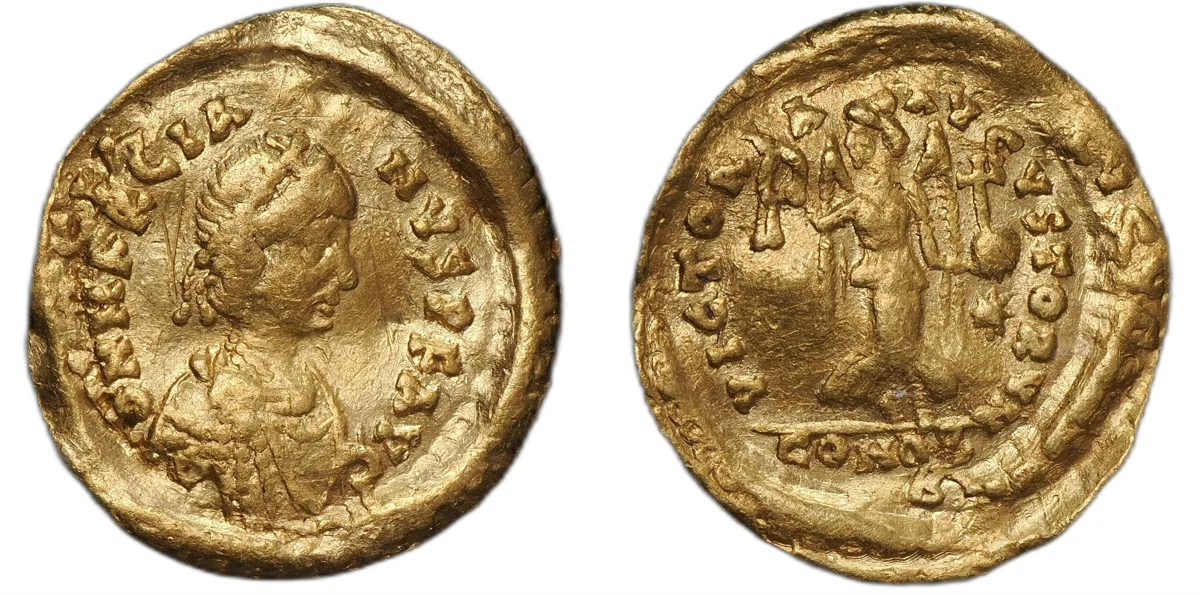
Marcian, AD 450–457. AV Tremissis
Lot 613 · Consigned by NumisOne
Closed
Description
Marcian, AD 450–457. AV Tremissis (16 mm, 1.45 g, 12 h). Constantinople mint.
Obv. D N MARCIA-NVS P F AVG. Pearl-diademed, draped, and cuirassed bust of Marcian to right.
Rev. VICTORIA AVGVSTORVM / CONOB. Victory advancing right, head turned left, holding wreath in her right hand and globus cruciger in her left; in field to right, star.
Refs. Depeyrot 87/5; RIC X 52.
Struck at Constantinople early in the reign of Emperor Marcian, this bright and finely engraved tremissis exemplifies the artistry and ideological restraint of the mid-fifth-century Byzantine mint. The obverse portrait, with its precisely detailed diadem and elegant drapery folds, conveys the calm authority of a ruler whose accession brought an end to years of dynastic turbulence following the death of Theodosius II. The carefully engraved features—high brow, firm profile, and composed expression—project Marcian’s image as a man of discipline and piety, chosen by divine will and imperial consensus to restore order to the Eastern Empire.
The reverse depicts Victory, advancing with confident poise, carrying both the wreath of triumph and the globus cruciger, a synthesis of classical and Christian symbolism. The old pagan personification of military success is here reimagined as the celestial embodiment of divine favour granted to Christian emperors. The star in the right field reinforces this celestial aspect, evoking heavenly guidance and divine sanction for Marcian’s rule. The inscription VICTORIA AVGVSTORVM (“Victory of the Emperors”) alludes not to a single campaign, but to the enduring success and legitimacy of the imperial office itself—now sanctified by faith.
Marcian’s reign, though brief, proved a decisive turning point in the late Roman world. A capable general from humble origins, he was elevated through marriage to Pulcheria, the sister of Theodosius II, and quickly established himself as a strong yet pragmatic ruler. He is remembered for stabilising imperial finances, ending tribute payments to Attila the Hun, and asserting religious orthodoxy by convening the Council of Chalcedon in AD 451—a defining moment in the history of Christian doctrine. His rule marked the end of the Theodosian dynasty and the emergence of a new era of bureaucratic and theological consolidation within the Eastern Empire.
The tremissis, one-third of a solidus, served as a convenient denomination for smaller gold transactions and ceremonial distributions. Its consistently high purity and uniform design made it a trusted vehicle of imperial prestige across the Mediterranean world. Coins such as this, often presented as gifts or stipends to officials and soldiers, carried not only monetary value but the weight of the emperor’s image and authority.