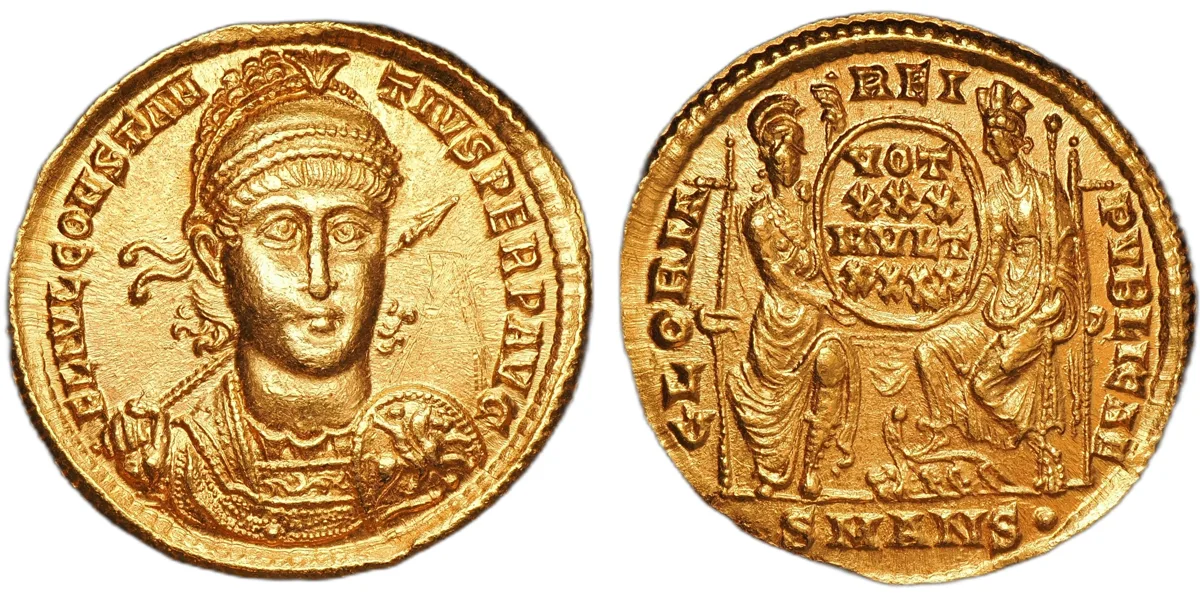
Constantius II, AD 337 – 361. AV Solidus
Lot 585 · Consigned by NumisOne
Closed
Description
Constantius II, AD 337 – 361. AV Solidus (21 mm, 4.48 g, 6 h). Antioch mint, AD 355 – 361. Obv. FL IVL CONSTAN-TIVS PERP AVG. Helmeted, pearl-diademed and cuirassed bust of Constantius II facing, his head turned slightly to right, holding a spear over his shoulder in his right hand and a shield on his left shoulder decorated with a horseman galloping right and spearing a fallen foe. Rev. GLORIA REI PVBLICAE. Roma and Constantinopolis seated facing, jointly supporting a shield inscribed VOT / XXX / MVLT / XXXX; Roma to left, helmeted, holding spear; Constantinopolis to right, turreted, resting her foot upon a ship’s prow and holding sceptre; in exergue, SMANS•. Refs. Depeyrot 9/1; RIC VIII Antioch 162. Struck during the closing years of Constantius II’s reign, this magnificent solidus from Antioch is among the most accomplished representations of imperial statecraft and dynastic legitimacy of the mid-fourth century. The obverse presents the emperor in resplendent martial guise: helmeted, cuirassed, and resolute, the very embodiment of the Christian soldier-emperor who defended both empire and orthodoxy. The shield device, showing a mounted horseman spearing a fallen foe, mirrors the emperor’s own long struggle against the Persians and internal usurpers, while the delicate engraving of the face—idealised yet individual—reflects the stylistic refinement of Antioch’s late-Roman mint workshops. The reverse legend, Gloria Rei Publicae (“The Glory of the Republic”), celebrates the harmony and endurance of the Roman state. Seated side by side, Roma and Constantinopolis personify the twin capitals of the Empire: the old city of Mars and Virtus beside the new city of Faith and Fortune. Between them they hold the shield of vows, Vota Tricennalia, recording the emperor’s thirtieth anniversary of reign and prayers for his fortieth—a type that consciously linked Constantius to the long-lived rulers of Rome’s past, while asserting divine favour for the Christian empire’s future. The inclusion of both cities symbolised not division, but the continuity of power from west to east, and the universal dominion of the emperor as ruler of both worlds. The Antioch mint, long the imperial stronghold of the eastern provinces, flourished under Constantius, producing coins of remarkable consistency and clarity. Its engravers perfected a distinctive late-classical aesthetic: crisp linear modelling, disciplined symmetry, and a calm idealism that transformed political imagery into sacred imperial iconography. This type belongs to the final phase of Constantius’ coinage before his sudden death in AD 361 at Mopsucrenae, while on campaign against Julian. Within a few years, the ancient ideal of a unified Christian empire would fragment—but this issue preserves in gold the serene confidence of its last undisputed ruler.