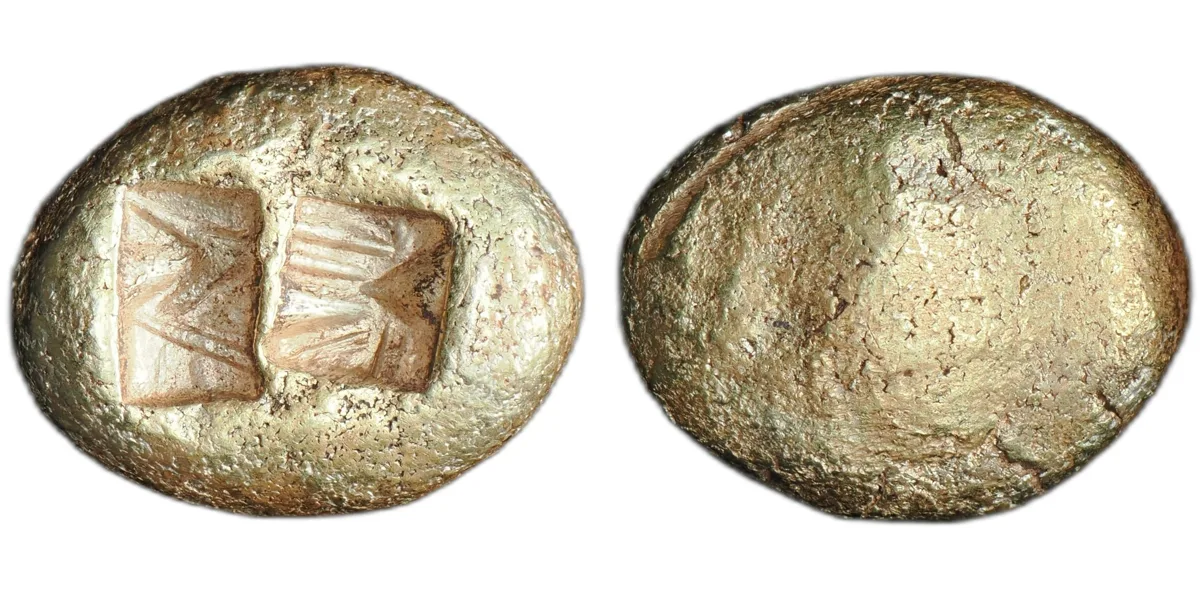
Ionia, uncertain mint, c. 625-600 BC. Electrum trite
Lot 128 · Consigned by NumisOne
Closed
Description
Ionia, uncertain mint, c. 625-600 BC. Electrum trite (one-third stater), 14 mm, 4.73 g. A smooth, featureless bulge occupies the obverse, its pale-gold alloy dulled by river-wash silver and flecks of iron-oxide desert patina; the reverse carries two deep rectangular punch-marks whose interiors are filled with diagonal ‘mill-sail’ striations set on either side of a dividing ridge, an arrangement catalogued by Weidauer (Grp. I, nos. 3-6) among the very first Ionian/Lydian coin issues. Extremely rare in any condition, the piece shows only the usual flan roughness and retains sharp incuse detail. Weidauer 4; cf. Rosen 2382; Traité pl. VI, 10; SNG Kayhan 673. See NAC Auction 154, Lot 1263 for similar type.
Struck from native electrum washed down the Pactolus and Maeander rivers, these plain globular coins represent the experimental phase of money in the Greek East. Herodotus credits the Lydians with inventing coinage, yet archaeology shows parallel Ionian workshops adopting the same idea in the third quarter of the seventh century BC, when traders at Miletus, Ephesus and nearby emporia needed a convenient weighed medium for bulk purchases of wool, wine and silver. The absence of a civic emblem and the crude rectangular validating punches betray a world in which mint authority was still personal or dynastic, not yet civic; the trite denomination, about 4.7 g, one-third of a 14-gram stater, proved ideal for the day-to-day marketplace, where a full stater would have been an unwieldy fortune. Within a generation the “anonymous bulge” issues gave way to the familiar lion, stag and seal types that loudly advertised their city-states, but this little lump of electrum preserves the moment of invention: the first time metal, mark and guarantee fused into what we now call a coin.