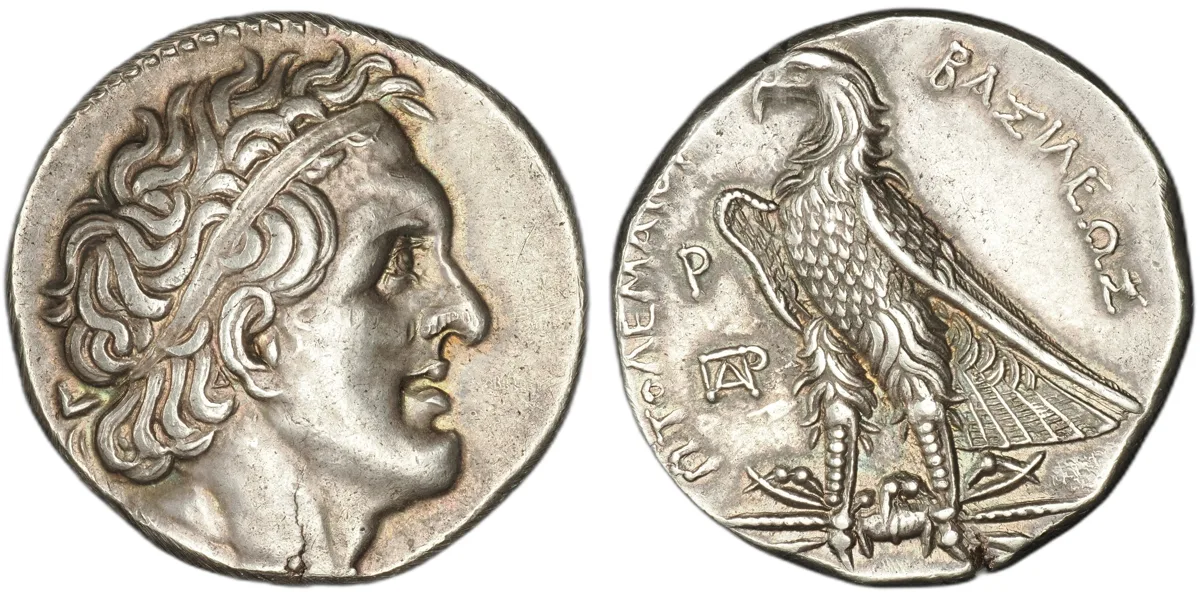
PTOLEMAIC KINGDOM. Ptolemy I Soter, 305/4–282 BC AR Tetradrachm
Lot 121 · Consigned by NumisOne
Closed
Description
PTOLEMAIC KINGDOM. Ptolemy I Soter, as King, 305/4–282 BC (struck as satrap, c. 294 BC). 13.94 g; ~27 mm; 12 h AR Tetradrachm, Alexandria mint. Obv. Diademed head of Ptolemy I right, wearing aegis around neck; tiny Δ behind ear. Rev. ΒΑΣΙΛΕΩΣ ΠΤΟΛΕΜΑΙΟΥ – Eagle standing left on thunderbolt; to left, P above ΠA (monogram); all within dotted border. Svoronos 256 & pl. IX, 12; CPE 154; Attractive old cabinet tone with subtle gold highlights; minor flan crack at 6 o’clock and a few inconsequential edge nicks, the hair and plumage sharply struck and unusually detailed. Hess sale, 25 March 1929 (Spencer Churchill & W. Vogel collections), lot 462. Numismatica Ars Classica Auction 120, Lot 462
After seizing Egypt in the wake of Alexander’s death, Ptolemy spent two decades styling himself merely “satrap” while the other Diadochi squabbled over the royal title. By 305 BC he too adopted basileus, signalling Egypt’s full independence. This tetradrachm—struck soon after that declaration—broadcasts his new status: the obverse blends Alexander’s leonine hair with a diadem and the aegis of Zeus, forging a visual link between conqueror and successor, while the reverse eagle on thunderbolt became the icon of the Ptolemaic house for three centuries. Control marks (Δ and ΠA) identify an early Alexandria workshop that would grow into the Mediterranean’s busiest mint, flooding the Hellenistic world with silver of uniform weight and design. Thus the coin captures a pivotal moment when Ptolemy turned Egypt from a Macedonian province into a dynastic super-power whose money set the standard from Cyrene to Cyprus.