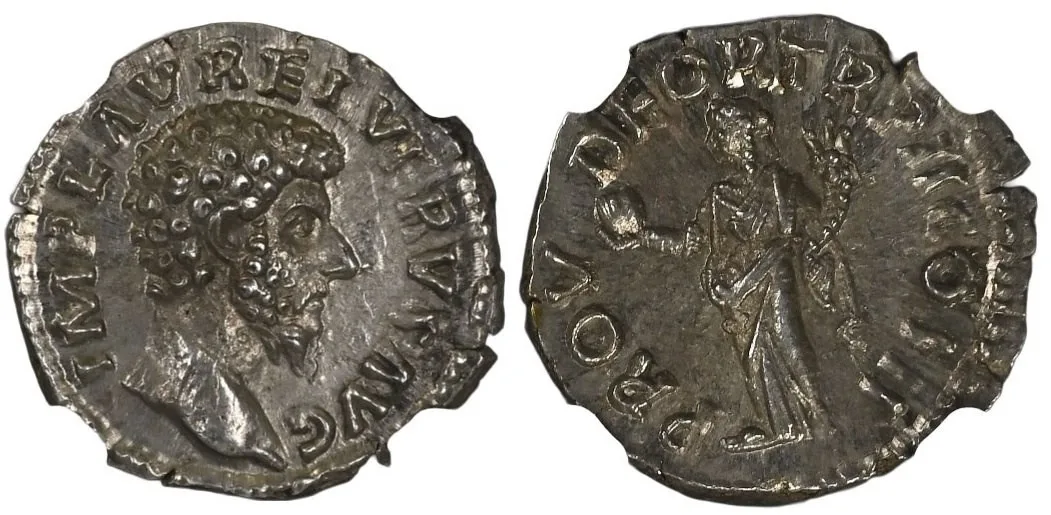
Lucius Verus, AD 161-169. Silver denarius
Lot 226 · Consigned by NumisOne
Closed
Description
Lucius Verus, AD 161-169. Silver denarius (Rome mint, spring–autumn AD 161), NGC-certified Choice AU ★ cert. #6710157-041. IMP L AVREL VERVS AVG, showing the newly elevated Augustus with his distinctive luxuriant curls and trimmed beard. Rev, PROV DEOR TR P COS II, depicts Providentia standing left, cradling a cornucopia while presenting a globe—iconography that proclaims the “Providence of the Gods” watching over the empire—and records Verus’s tribunician power and second consulship, both conferred in the opening months of his joint reign. Die axis, fabric and lettering match the early imperial series catalogued as RIC III 463 (under Marcus Aurelius); BMCRE 35; RSC 144. Struck on a bright, silvery flan with satiny lustre in protected areas, the piece offers bold detail in the hair, facial features and drapery folds, with only minor edge chips at 11 and 3 o’clock that do not affect the legends.
When Antoninus Pius died on 7 March 161, the Senate took the unprecedented step of elevating both his adopted sons—Marcus Aurelius and Lucius Verus—to the purple, creating Rome’s first formally recognised collegial emperorship. This denarius belongs to Verus’s very first issue as co-Augustus: the title IMP (“imperator”) and the absence of victory titles show it was struck before his Parthian campaigns began. The choice of Providentia was deliberate propaganda, assuring Romans that divine foresight had ordained the dual succession and would guide the young emperors through the brewing eastern crisis that soon erupted into the Parthian War. In effect, the coin is a small silver manifesto of the new ruling partnership—one that would see Verus enjoy the luxuries of Antioch while Marcus shouldered the administrative burden in Rome, yet still emerge with a shared triumph. Few types capture that brief moment of optimism so vividly, making this well-preserved example a tangible witness to the dawn of the Antonine co-reign.