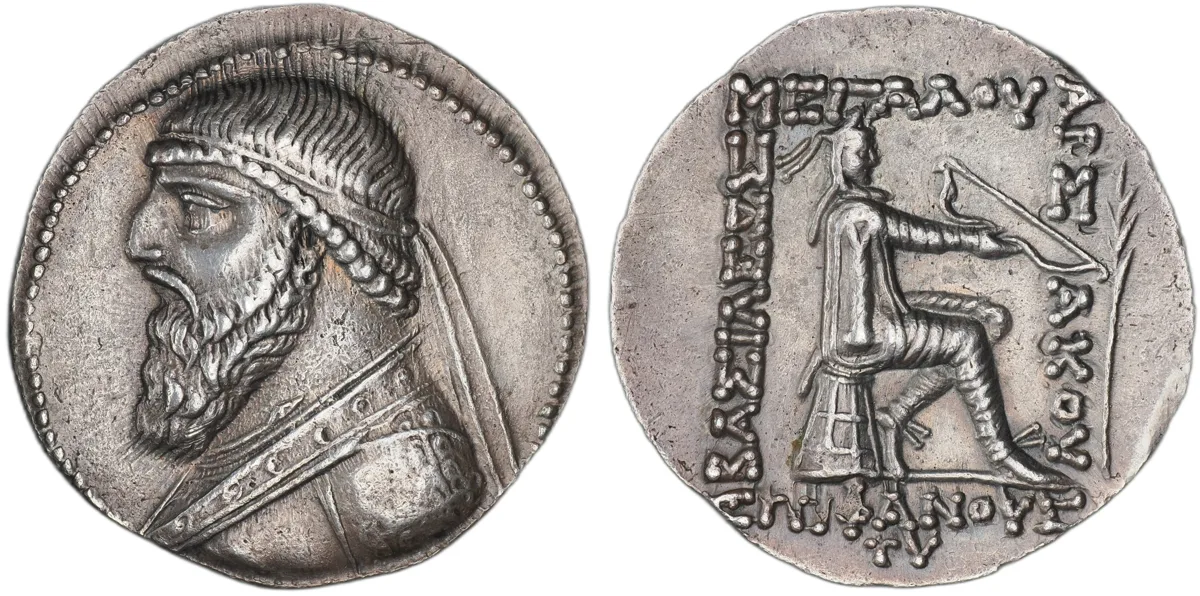
PARTHIAN KINGDOM. Mithradates II “the Great,” 121 – 91 BC. AR Tetradrachm
Lot 289 · Consigned by NumisOne
Closed
Description
PARTHIAN KINGDOM. Mithradates II “the Great,” 121 – 91 BC. AR Tetradrachm, Seleukeia on the Tigris, struck c. 120/19 – 109 BC 29 mm, 15.82g, 12 h. Obv. Diademed and bearded bust left¹ in royal tiara tied with a jewelled diadem; elaborate torque across the chest; dotted border. Rev. ΒΑΣΙΛΕΩΣ ΜΕΓΑΛΟΥ / ΑΡΣΑΚΟΥ ΕΥΕΡΓΕΤΟΥ / ΕΠΙΦΑΝΟΥΣ / ΦΙΛΕΛΛΗΝΟΣ Archer (Arsakes I) enthroned right on backless seat, holding recurved bow; vertical grain-ear in right field; all within border of pellets. Sellwood 24.4; Sunrise 284; Shore 67. Handsomely toned a light silver-grey with underlying luster; portrait in high relief, legends complete; a short strike-flat on the grain-ear, otherwise choice extremely fine and superior to most surviving examples of this short-lived tetradrachm series.
Few Parthian issues rival the visual magnetism of Mithradates II’s large-silver coinage. The king’s rugged, forward-tilting portrait—tiara pulled low like a mailed helmet and beard modelled in Hellenistic curls—projects the confidence of a ruler who humbled Armenia, pushed the Seleucids out of Mesopotamia, and first assumed the Achaemenid style title “King of Kings.” On the reverse an ancestral figure, Arsakes I, sits in timeless vigil, his bow symbolising both nomad heritage and the mounted warfare that made Parthia a super-power.
These tetradrachms were struck only while Seleukeia on the Tigris still answered to Mithradates’ governors, explaining their relative rarity next to the plentiful drachms of the eastern mints. They circulated in the polyglot markets of Babylonia, where Greek remained the monetary lingua franca, but the grain-ear control mark roots the issue in the rich agricultural belt that financed Parthia’s westward surge. For collectors the piece neatly encapsulates the empire’s cultural duality—Greek legend and artistry married to unmistakably Iranian royal imagery—at the very moment Parthia joined Rome and Han China as a true peer on the Silk Road.