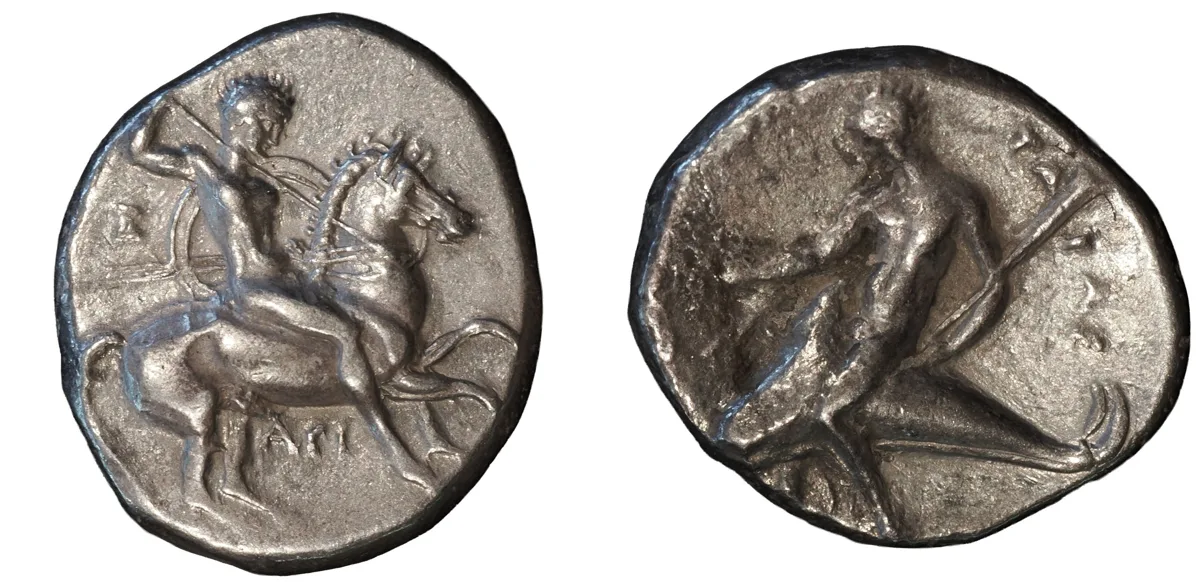
CALABRIA, Tarentum. Silver Nomos (Didrachm), ca. 325-280 BC.
Lot 036 · Consigned by NumisOne
Closed
Description
CALABRIA, Tarentum. Silver Nomos (Didrachm), ca. 325-280 BC. 7.80 g. 20 mm. 6 h. Obv. ΤΑΡΑΣ — The city’s eponymous hero Taras (Phalanthos), nude, riding left on a dolphin whose tail curves up behind; he grips a long trident diagonally across his body. Rev. Nude cavalryman cantering right, brandishing a spear above his shoulder; behind him a large chariot-wheel (tropaion-shield); below the horse, ethnic ΤΑΡΑ (partly off flan). Fischer-Bossert 681 ff.; Vlasto 550 ff.; HN Italy 903; SNG ANS 1049. Toned, light-gold iridescence in recesses; well-struck on a broad flan.
Struck at the height of Tarentum’s prosperity, this didrachm unites the city’s two proud emblems: Taras, mythic son of Poseidon, sailing the Gulf’s waters on his dolphin, and the famed Tarantine cavalry, here shown in dynamic three-quarter view with spear poised for the charge. The wheel behind the horseman alludes to the city’s chariot games and serves as a clever die-engraver’s device to balance the composition; the compact ethnic beneath the belly is typical of late-fourth-century issues when magistrate names gave way to abbreviated civic signatures.
Beyond its artistry, the coin embodies Tarentum’s geopolitical dilemma. With fertile lands and a powerful fleet, the polis financed mercenary horsemen to shield Magna Graecia from Italic tribes and, soon, an encroaching Rome. Massive silver emissions like this one paid Pyrrhus’ Epirote armies (280-275 BC) and later Hannibal’s allies, making Tarentine staters a hard currency of war across southern Italy. Their imagery—sea-born founder above, land-based warrior below—captures the dual maritime and cavalry identity that allowed a Greek colony on the Mediterranean’s heel to punch far above its weight for two tumultuous centuries.