Description
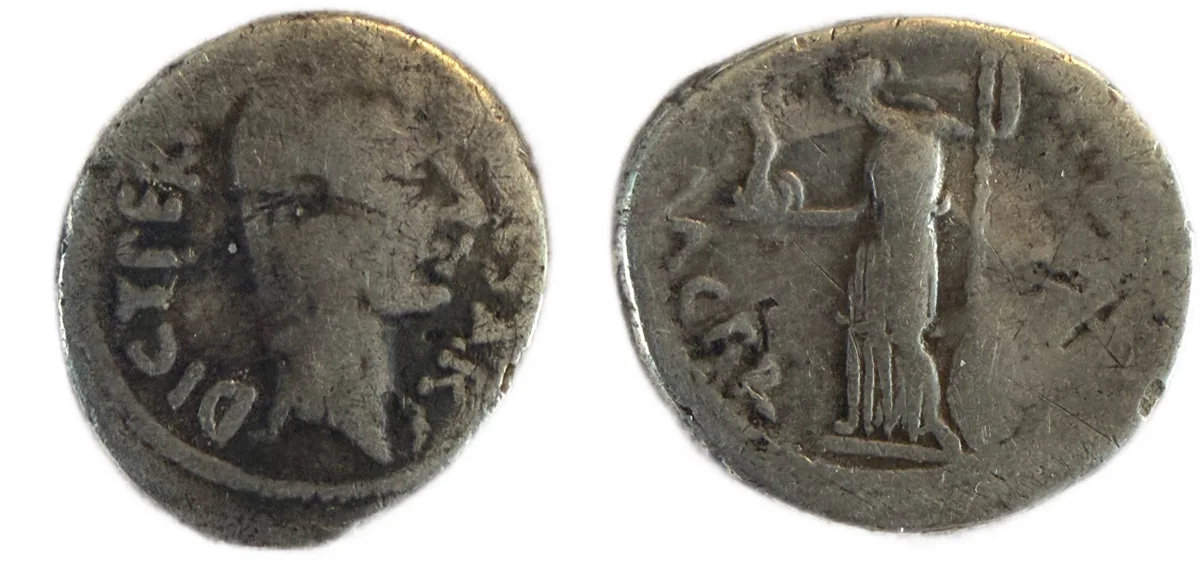
This denarius, struck between January -March in 44 BC, shortly before the fatal Ides, builds on the themes of the preceding coin. Here, the portrait of Caesar is again depicted in a veristic style, but his head is shown veiled to emphasise the sacred character of the dictator-now empowered for life, as indicated by the legend DICT PERPETVO. The element of the veil again alludes to his status as a member of the college of augurs. According to Roman religious custom, the augurs veiled their heads while divining the will of the gods from observing the flight of birds in the air or their movements on the ground. This was done so that the augur could only see ahead of him and would not risk the possibility of catching a glimpse of an ill omen out of the corner of his eye. This use of religious imagery in the service of politics pioneered by Caesar would be used much more deftly by his adoptive heir, Octavian, especially in his role as Augustus, the first of the Roman emperors. The reverse type illustrates the repression of moneyers' influence on the coinage in favour of Caesarean iconography. Although the legend names the moneyer P. Sepullius Macer, the type depicts Venus Victrix, a goddess closely associated with the gens Iulia and with the personal successes of Julius Caesar. The Julian family claimed its descent from Aeneas and Venus and Caesar had vowed a temple to Venus Victrix in return for victory over Pompey at the Battle of Pharsalus on 9 August 48 BC. However, in the aftermath of his victory over the Pompeians, Cesar instead opted to build the temple in honour of Venus as Genetrix, the originator of the gens Iulia. The temple was dedicated at the conclusion of Caesar's great triumph on 26 September 46 BC. Unfortunately, Julius Caesar did not live to see the temple and its associated forum completed. It remained unfinished at the time of assassination and was only finished by Octavian as an act of filial piety.