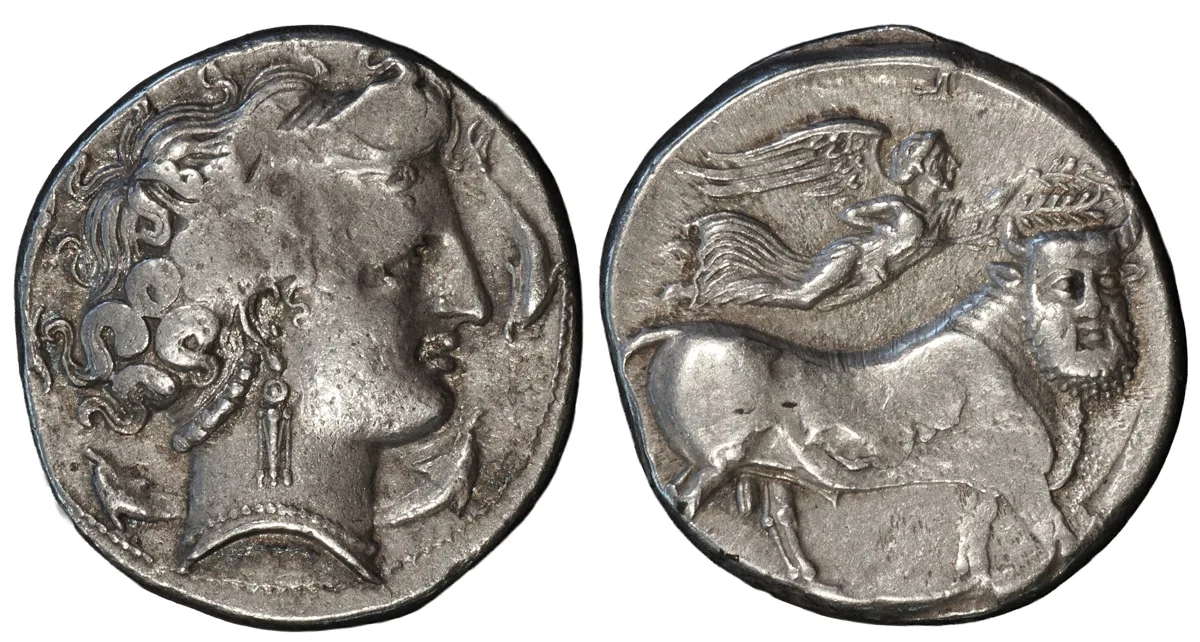
CAMPANIA, Neapolis. Silver Nomos (Didrachm), ca. 320–300 BC.
Lot 051 · Consigned by NumisOne
Closed
Description
CAMPANIA, Neapolis. Silver Nomos (Didrachm), ca. 320–300 BC. 7.26 g. Diameter: 19 mm. Die-axis: 7 h. Obv. Diademed head of the nymph Parthenope r., hair caught up in a sakkos and flowing in loose tendrils; triple-pendant earring and pearl necklace; three dolphins surrounding (two swimming upward behind, one downward below). Beaded border. Rev. Man-headed bull (Achelōos, river-god of the Sebethos) walking r., human face front, horns wreathed with reeds; above, Νίκη flying r., crowning the bull with a wreath; tiny control-letter Ι in field above; faint traces of ethnic ΝΕΟΠΟΛΙΤΩΝ in exergue. HN Italy 579; Sambon 457; SNG ANS 336; SNG Copenhagen 437; Sear (GCV) 330. Cabinet-toned, attractive metal with iridescent highlights. A bold, classical-style portrait and an unusually expressive bull.
This late-Classical didrachm pairs a delicately engraved head of the siren-nymph Parthenope—her hair in flowing tendrils, ringed by agile dolphins that advertise Neapolis’ maritime identity—with a vigorous man-faced bull representing the river-god Achelōos / Sebethos, here being crowned by Nike. The tiny control-letter Ι marks a short, scarce issue from ca. 320–300 BC, struck on the Campanian weight standard (c. 7.3 g) to finance mercenary pay and civic needs during the turmoil of the Second Samnite War; its fine style reflects the influence of contemporary Sicilian die-cutters yet retains a uniquely soft, portrait-like quality.
The imagery proclaims the city’s Greek heritage, fertile hinterland, and recent military good fortune: Parthenope evokes the founding myth of the siren whose body washed ashore on Megaride, while the crowned Achelōos celebrates the life-giving Sebethos and hints at Neapolis’ successful alliance with Rome after the siege of 327 BC. These elegant silver issues became touchstones for later Campanian coinage and, centuries on, were still cited by Roman authors—testament to a moment when Magna Graecia, Oscan Campania, and an ascendant Rome converged on Italy’s volcanically rich southwestern shore.