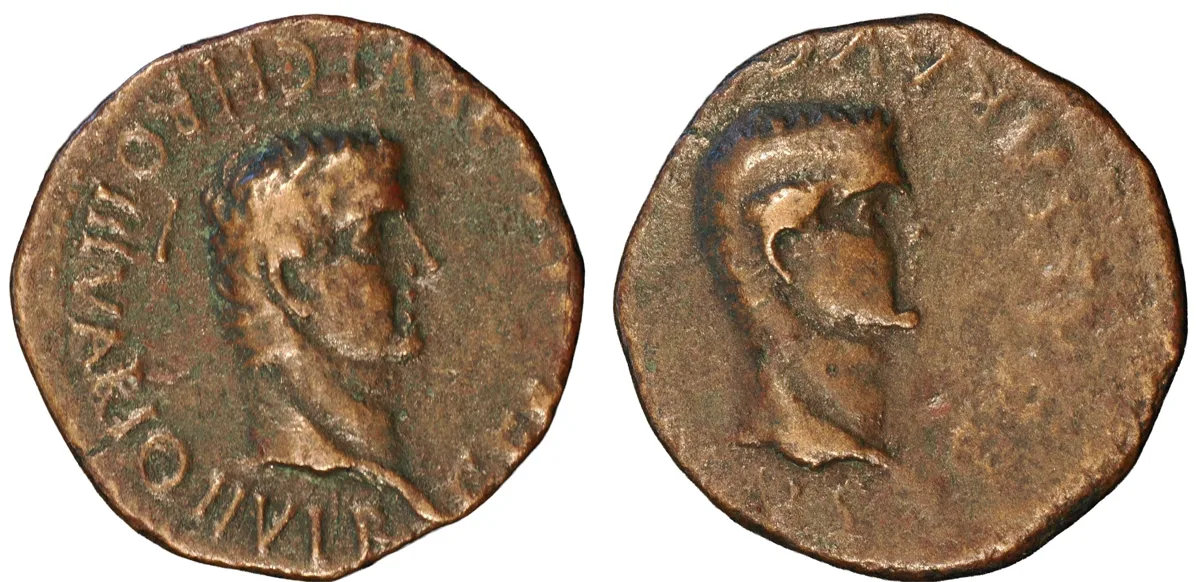
Caligula (AD 37–41), Æ As, Rome mint, AD 37–38, 21mm.
Lot 151 · Consigned by NumisOne
Closed
Description
Caligula (AD 37–41), Æ As, Rome mint, AD 37–38, 21mm. Obverse: GERMANICVS CAESAR TI AVGVST F DIVI AVG N, bare head of Germanicus (Caligula’s father) left. Reverse: C CAESAR AVG GERMANICVS PON M TR POT around large S C; legend naming Gaius (Caligula) as “Gaius Caesar, Augustus, Germanicus, Pontifex Maximus, with tribunician power”. RIC I 38; BMCRE 46; Cohen 27. Surfaces worn with olive-brown patina, legends partially visible, portrait and reverse details worn but discernible.
Emperor Gaius (nicknamed Caligula) ruled from AD 37 until 41, a brief reign marked by both grandiose public works and later infamy for misrule. His coinage, however, was carefully used as a propaganda tool to legitimize his authority. Unlike Tiberius, who kept a stable coinage type, Caligula introduced a variety of designs featuring his deified ancestors and family members. He commemorated his father, Germanicus, with portraits on coinage (even adopting “Germanicus” into his name), and also honored his mother Agrippina the Elder, his brothers, and sisters in various issues The bronze As above – struck by decree of the Senate (indicated by S C) – exemplifies this dynastic propaganda. One side depicts Germanicus, a hugely popular general, while the inscription on the other side displays Caligula’s titles, implicitly linking Caligula to his revered father’s legacy.