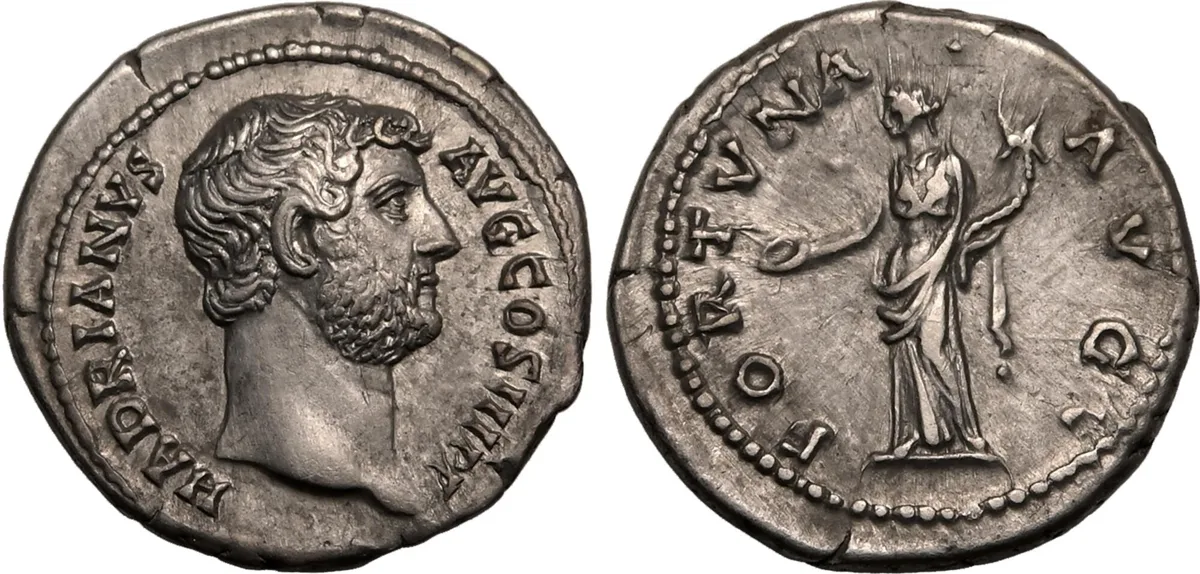
Hadrian, A.D. 117-138. Denarius, Rome, struck A.D. 133-135
Lot 199 · Consigned by NumisOne
Closed
Description
Hadrian, A.D. 117-138. Denarius, Rome, struck A.D. 133-135 (COS III, Pater Patriae series) Silver 18.5 mm, 3.37 g, die axis 6 h. Obv. HADRIANVS AVG COS III P P – Bare head of Hadrian right; unusual plain-headed portrait without the usual laurel wreath. Rev. FORTVNA AVG – Fortuna standing left, holding patera over altar (out of field) and cornucopia. Ref. RIC II.3 2012. Very rare bust type (OCRE cites just 8 specimens). Soft gun-metal toning with pale champagne highlights; an exceptionally sharp, unlaureate portrait set on a broad, medallic flan. Reverse fully centred with complete border beading. A discreet edge mark at 10 o’clock.
By 133 – 135 Hadrian had entered the final phase of his reign, intent on consolidating rather than enlarging the empire. The bare-headed portrait seen here is telling: the emperor presents himself neither as a conquering imperator (laureate) nor as a victor crowned by divinity (radiate), but as a civilian ruler and pater patriae concerned with the commonweal.
The reverse reinforces that message. Fortuna, dispenser of prosperity, pours libations and cradles a cornucopia – visual shorthand for the grain shipments and annona reforms on which Rome’s urban population depended. Struck at the same time as the suppression of the Bar-Kokhba revolt in Judaea, the type quietly advertises renewed stability when other series of the period (notably the Judaea Capta bronzes) would have been too provocative for a city weary of war.
Denarii of Hadrian with a bare head are markedly scarcer than their laureate counterparts; the combination with Fortuna AVG is rare enough to merit separate listing in the new RIC II.3 and remains absent from many major collections. Well-preserved examples such as the present piece capture a subtle shift in Hadrian’s self-presentation—from victorious traveller to prudent guarantor of the empire’s fortune.