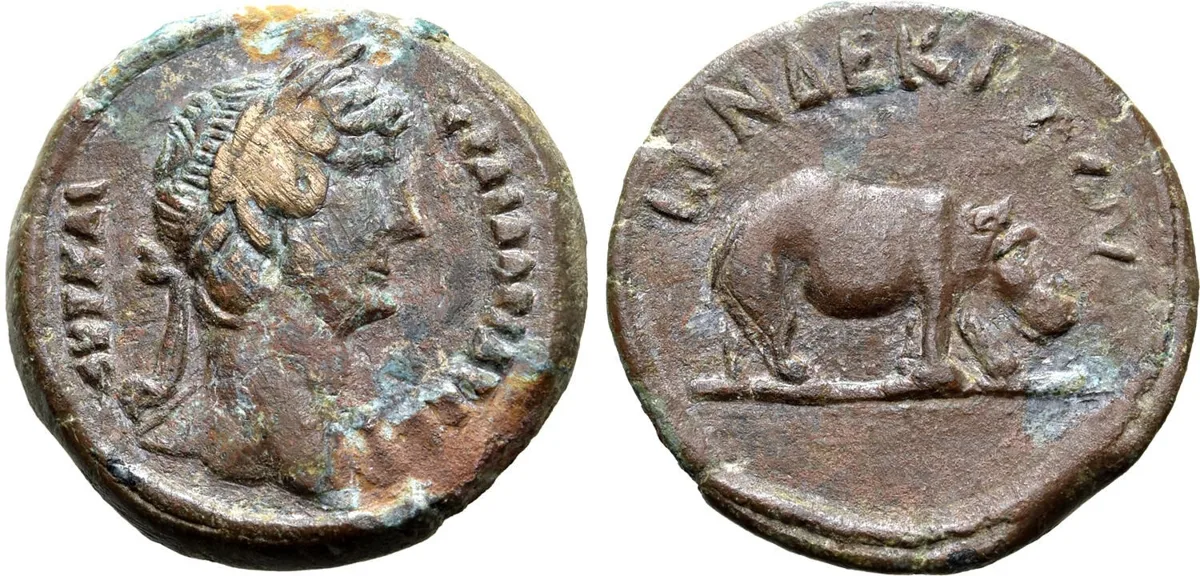
Hadrian (A.D. 117-138). Æ Diobol, Alexandria, Regnal Year 11 = A.D. 126/7
Lot 200 · Consigned by NumisOne
Closed
Description
Hadrian (A.D. 117-138). Æ Diobol, Alexandria, Regnal Year 11 = A.D. 126/7. Bronze 24 mm, 8.43 g, die axis 12 h. Obv. ΑΥΤ ΚΑΙ ΤΡΑΙΑ ΑΔΡΙΑ ϹΕΒ – Laureate head of Hadrian right, slight drapery on far shoulder.
Rev. L ЄΝΔЄΚΑΤΟΥ (date) – Hippopotamus standing right on ground-line; border of dots. Ref. RPC III 5676; Dattari-Savio 7967; Emmett 1136 (R5). Warm brown surfaces with scattered green highlights; minor smoothing in fields, otherwise honest wear and clear devices. Very fine for the issue and very rare (RPC lists fewer than a dozen specimens).
The hippopotamus is one of the most coveted reverse designs in the Alexandrian bronze series. To contemporary Romans the creature was the very embodiment of Egypt’s exotic power: terrifying, river-bound, yet essential to the ecology of the Nile. On Alexandrian coinage, the hippo first appears under Augustus but is struck only sporadically thereafter, always in small quantities and usually to mark a significant anniversary or festival.
Hadrian’s regnal year 11 (A.D. 126/7) issues inaugurate a new animal series that parades Egypt’s distinctive fauna before the imperial audience. The choice of the hippopotamus may allude to the annual Nilotic inundation, whose success guaranteed grain shipments to Rome, or to the imperial privilege of staged “hippopotamus hunts” in the hippodrome. Either reading advertises the emperor’s control over the life-giving river and the bread-basket province it sustained.
Bronze diobols of this date form the second-highest denomination of Alexandria’s local currency. Their module and thick fabric give the engravers room for unusually bold designs; on the present specimen the rounded bulk of the animal and its knobby hide are rendered with remarkable realism. Coupled with its rarity and pleasing patina, this coin is a tangible, copper-alloy window onto Hadrian’s sophisticated provincial propaganda in the land of the Pharaohs.