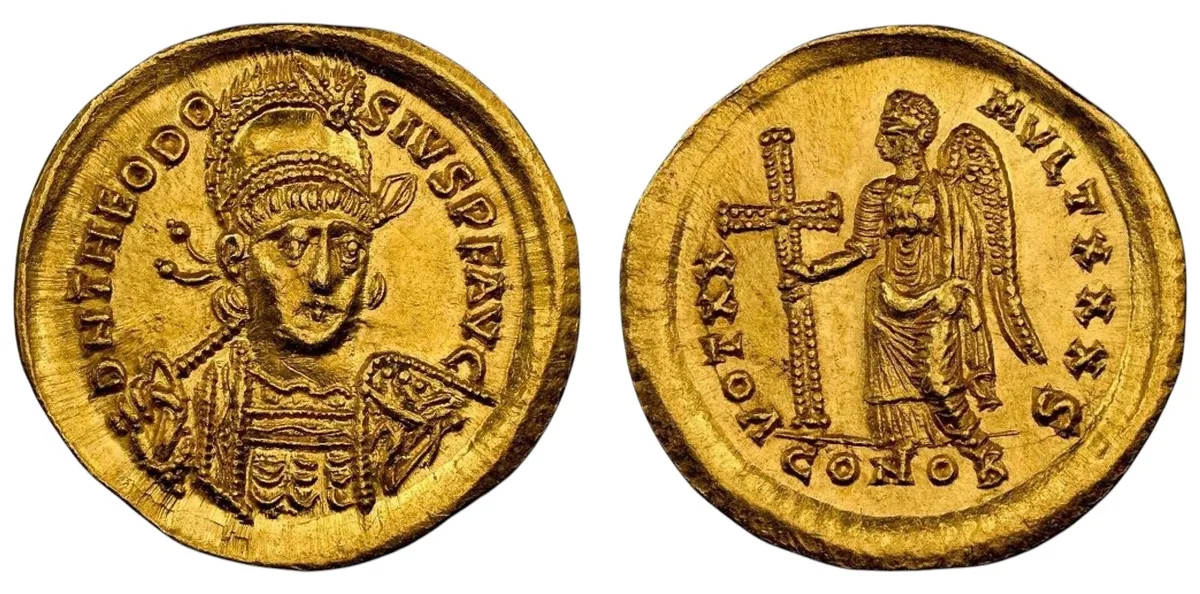
Theodosius II, Eastern Roman Empire, A.D. 402-450. AV Solidus
Lot 287 · Consigned by NumisOne
Closed
Description
Theodosius II, Eastern Roman Empire, A.D. 402-450. AV Solidus, Constantinople, 6th officina, A.D. 420-422
Gold 20 mm, 4.46 g, die axis 6 h. Obv. D N THEODO-SIVS P F AVG – Pearl-diademed, helmeted and cuirassed bust of Theodosius II facing, head turned slightly right; he holds a long spear over his right shoulder and a shield resting on his left arm, the shield ornamented with a charging horseman. Rev. VOT XX-MVLT XXX S – Victory standing facing, head left, holding a long jewelled cross grounded before her; in exergue CONOB. Ref. RIC X 219; Depeyrot 50/1; cf. Hahn MIB 4. NGC MS (Strike 5/5, Surface 2/5) 6607727-020, light brush marks and small graffito noted on holder. Soft satiny lustre and sharp detail on the emperor’s elaborate helmet and the beaded limbs of the cross; a handsome example despite the minor surface flaws.
Historical Commentary
Struck in the third decade of Theodosius II’s lengthy reign, this solidus neatly encapsulates the priorities of the early Byzantine court. The obverse portrait, with its stylised armour and tiny equestrian shield-device, promotes the emperor as protector militiae at a moment when the massive Theodosian Walls of Constantinople were nearing completion (A.D. 413–422). Yet the reverse shifts the emphasis from military power to divine sanction: Victory now holds a jewelled cross, the most overtly Christian element yet to appear on an imperial gold coin. The legend VOT XX-MVLT XXX proclaims that, having fulfilled vows for twenty years of rule, the emperor confidently anticipates thirty—a public statement of dynastic stability as the empire confronted Hunnic pressure along the Danube and diplomatic intrigue in the West.
Under Theodosius II the eastern mint at Constantinople became the fulcrum of imperial finance. Solidus output soared, but full Mint-State pieces with crisp devices—like the present coin—remain sought after, especially when the shield motif is clear and the cross unworn. Beyond its numismatic appeal, the coin is a golden witness to the merging of Roman statecraft with Christian iconography that would define the Byzantine world for the next millennium.