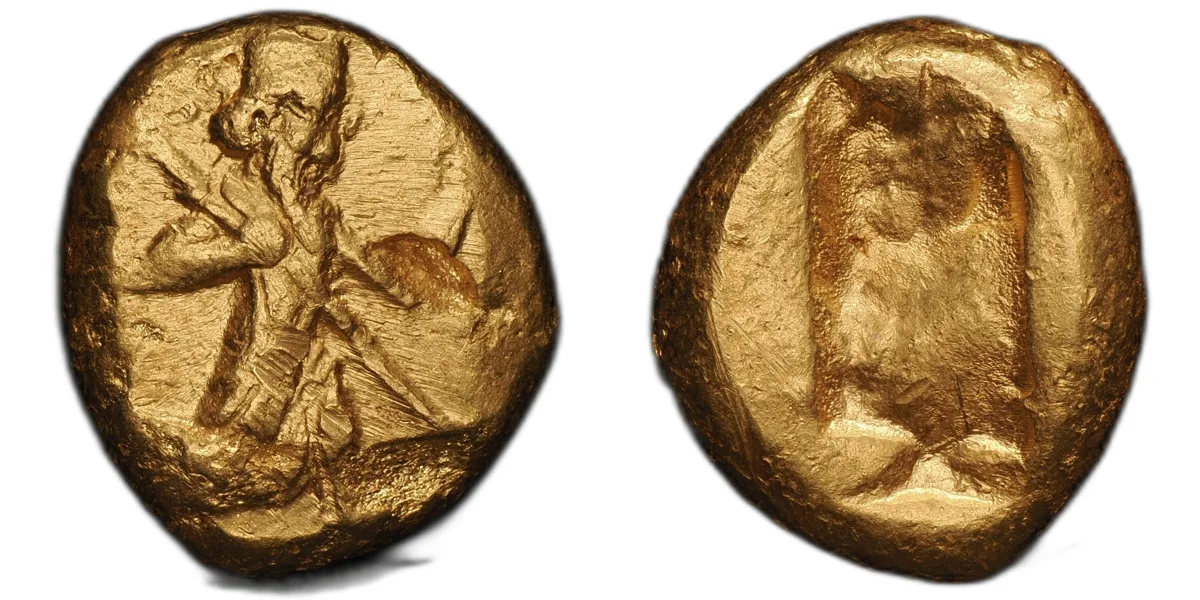
PERSIA. Achaemenid Empire. Time of Darios I to Xerxes II
Lot 225 · Consigned by GreatCoinsUSA
Closed
Description
PERSIA. Achaemenid Empire. Time of Darios I to Xerxes II, circa 485–420 BC. AV Daric (15 mm, 8.26 g), Lydo-Milesian standard, Sardes mint.
Obv. The Great King or hero in kneeling-running stance right, holding spear in right hand and bow in left.
Rev. Oblong irregular incuse.
Refs: BMC Arabia pl. XXIV, 26; Carradice Type IIIb A/B and pl. XIII, 27; Sunrise 24.
The daric was the principal gold denomination of the Achaemenid Empire, first introduced under Darios I (522–486 BC) and struck down to the time of Alexander the Great. Minted on the Lydo-Milesian weight standard at Sardes, the daric became one of the most widely recognised and trusted gold currencies of the ancient world, circulating from Egypt to Central Asia.
The obverse type depicts the Persian king—often described in modern scholarship as the “archer”—in the characteristic kneeling-running stance, holding both spear and bow as emblems of martial authority. This powerful image symbolised the Great King’s dual role as warrior and protector of the empire. The simple oblong incuse reverse is typical of early Achaemenid issues, prioritising recognisability and weight over elaborate artistry.
Darics such as this were instrumental in financing the empire’s vast bureaucracy, military expeditions, and diplomacy. They also entered Greek markets in enormous quantities, becoming familiar to Athens and her allies, and even providing the funds with which Persia supported Sparta during the Peloponnesian War. Their long-lived type testifies to both the political continuity and the financial stability maintained by the Achaemenid dynasty across more than a century.