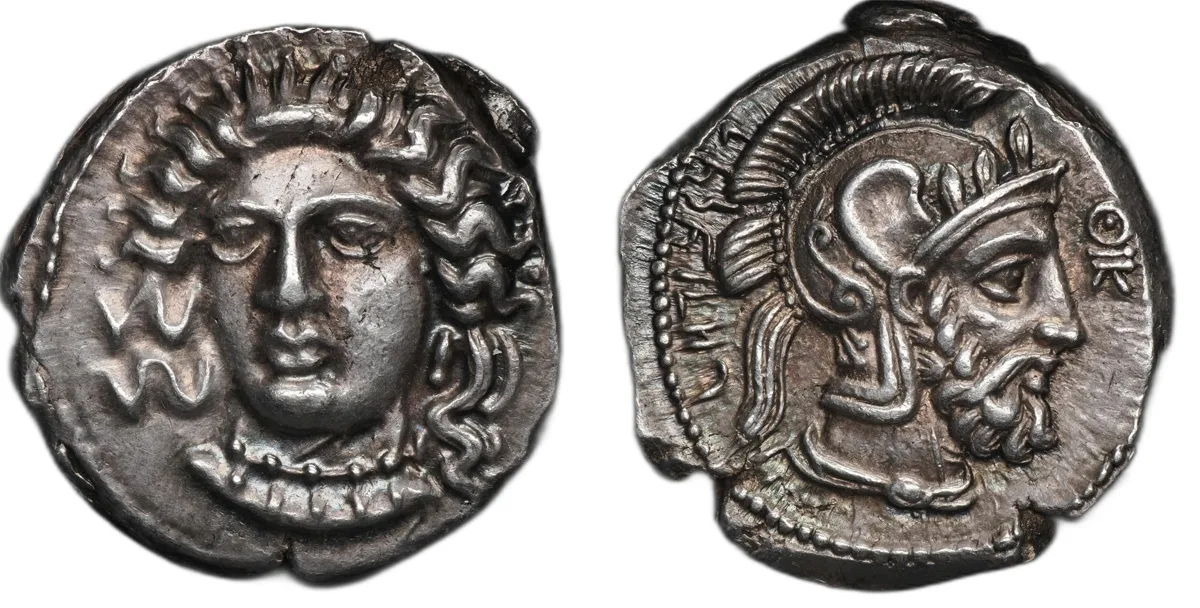
CILICIA. Tarsos. Pharnabazos, Persian satrap and commander
Lot 156 · Consigned by GreatCoinsUSA
Closed
Description
CILICIA. Tarsos. Pharnabazos, Persian satrap and commander, 380–374/3 BC. AR Stater (22 mm, 10.69 g, 11 h).
Obv. Diademed female head facing slightly left, adorned with pendant earrings and elaborate necklace.
Rev. 𐡅𐡓𐡍𐡁𐡆 𐡊𐡋-𐡊 (‘frnbzw klk’ in Aramaic). Bearded male head, possibly Ares, right, wearing Attic helmet with crest, volute on bowl, and three olive leaves above visor; in right field, monogram.
Refs: Casabonne series 3; SNG Paris 248 (same obv. die); SNG von Aulock 5925; cf. SNG Levante –.
This impressive and rare issue was struck at Tarsos under the authority of Pharnabazos, one of the most capable Persian satraps of the 4th century BC. Best known as satrap of Hellespontine Phrygia and as a commander in Persian campaigns against Sparta, Pharnabazos was entrusted with high command in Cilicia around 380 BC, reflecting both his military importance and his loyalty to Artaxerxes II.
The obverse portrait of a diademed female—often interpreted as a local goddess or possibly Aphrodite—shows the fusion of Greek iconography with Persian administrative authority. The reverse, inscribed with Pharnabazos’ name and title in Aramaic, presents a martial male head, plausibly identified as Ares, but also evocative of the Persian commander himself in heroic guise. The use of Aramaic, the lingua franca of the Achaemenid Empire, underscores the official and administrative character of this issue, while the imagery appealed to both Greek and local Cilician sensibilities.
These staters represent the complex cultural interplay in Asia Minor under Persian rule, where satraps like Pharnabazos commanded both imperial and regional resources while adopting Hellenic forms of representation. Their artistry, combining delicate detail in the female portrait with the striking martial reverse, places them among the most attractive satrapal coinages of the Achaemenid period.
Condition: Beautifully toned and well centred; minor weakness on the obverse, otherwise sharply struck and of high style. Extremely Fine.