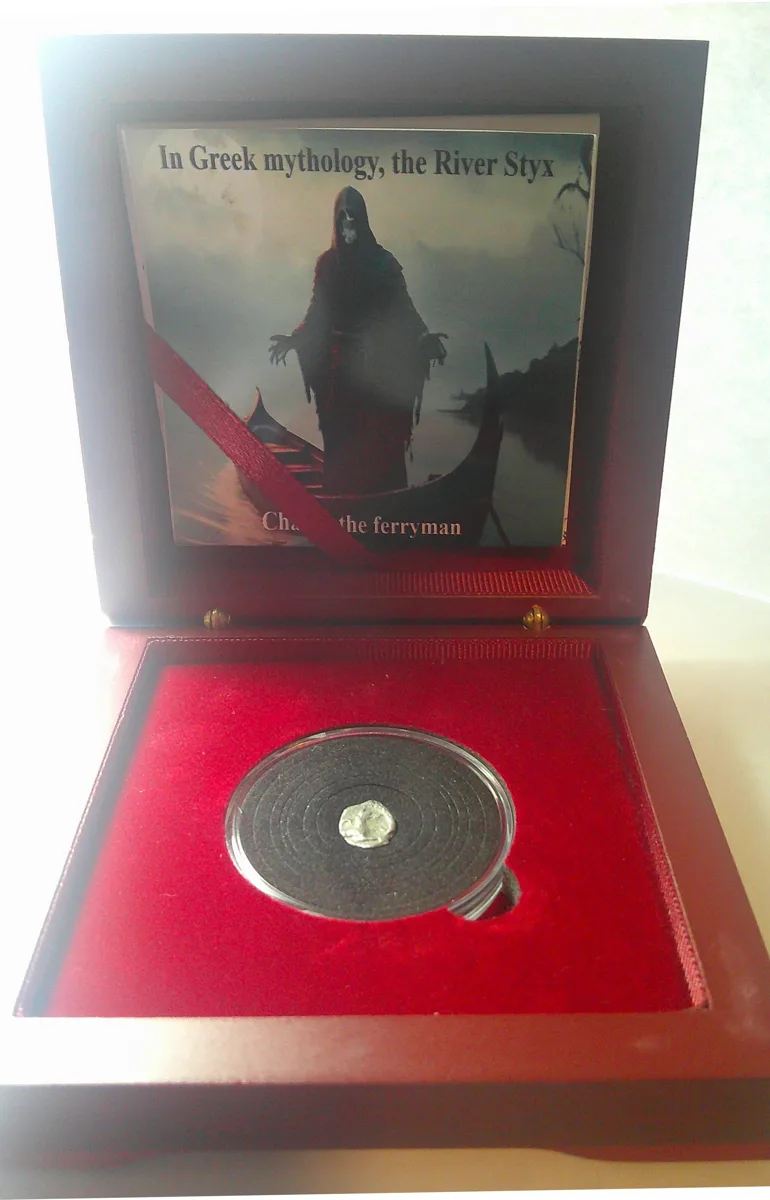
In Greek mythology, the River Styx Charon is the ferryman, obol (Wooden Box Set)
Sold by DNDRareCoins1974
Description
Lykaonia, Laranda. Circa 324-323 BC. AR 11mm .63gm Obol
Obv: Baaltars seated left, holding grain ear, bunch of grapes, and scepter.
Rev: forepart of wolf right; inverted crescent above. Göktürk 82; SNG BN 443 (uncertain Kilikian mint);
Ref: SNG Levante 225,
*** In Greek mythology, the River Styx Charon is the ferryman, obol
In Greek mythology, the River Styx Is a key feature of the Underworld, acting as a boundary between the world of the living and the dead. It's also the name of a goddess who embodies oaths and the water of which is used in binding oaths. Additionally, the River Styx is one of five rivers in the Underworld, and souls must cross it to enter Hades. In Greek mythology, Charon is the ferryman who transports the souls of the deceased across the River Styx and the Acheron, rivers that separate the world of the living from the underworld. He is often depicted as an old, grotesque man. To pay for the passage, the deceased would typically be buried with a coin in between their lips, known as Charon's obol. The River Styx was first written about in the 8th century BC by the ancient Greek poet Hesiod in his work Theogony, and by Homer in the epics The Iliad and The Odyssey. Hesiod established Styx as a primordial goddess and the eldest daughter of Oceanus, whose waters served as the most binding oath for the gods. In these foundational texts, Styx is portrayed not just as a river separating the mortal world from the Underworld, but as a deeply sacred, cosmic boundary. Breaking an oath sworn on its waters carried severe mythological consequences. The concept of the Styx being guarded by the ferryman Charon or possessing powers of invulnerability (like in the myths of Achilles) became widely expanded in later literature, such as in the 1st century BCE by the Roman poet Virgil in The Aeneid. Greek mythology, the most common coin used to pay Charon, the ferryman of the Underworld, is the obol. The first known written mention of paying a coin to the underworld ferryman Charon is found in the ancient Greek comedy “The Frogs by Aristophanes”, which was performed in 405 BC. Grieving families traditionally placed the coin inside the mouth or under the tongue of the deceased during burial rites. Stopped 5th Century CE: The widespread rise of Christianity across the Roman Empire caused the ritual to collapse as a mainstream practice. Christian theology rejected the concept of pagan deities like Charon and the necessity of buying passage to the afterlife. ***
Shipping USA Only
Sku# 3109