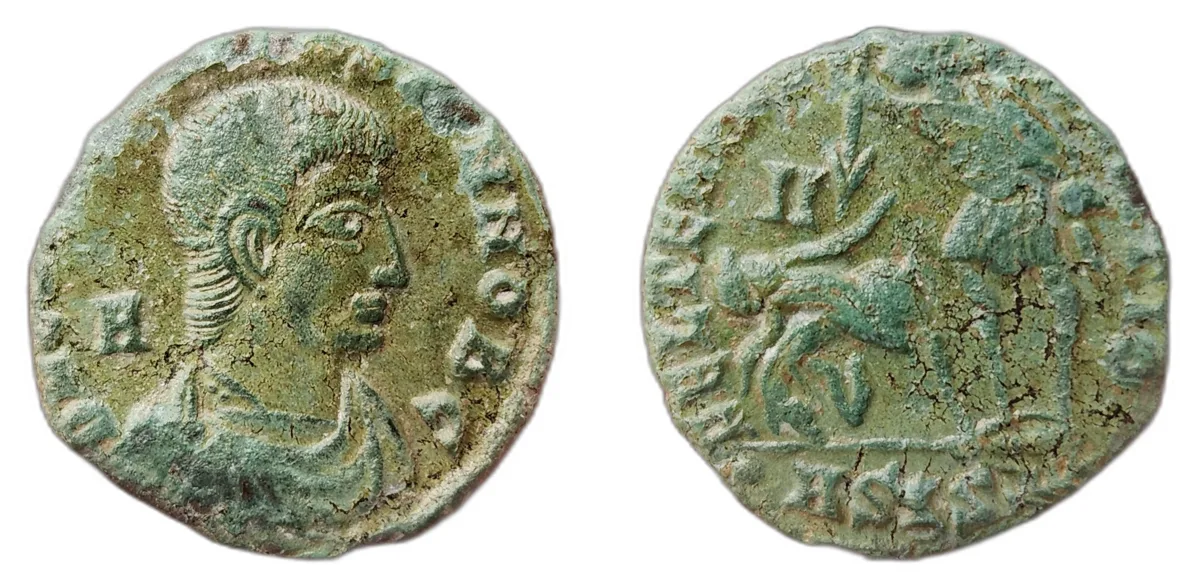
Centenionalis — Constantius Gallus — Fallen Horseman
Sold by NathanielsCreativeCollections
Description
Obverse: Bust of Constantius Gallus right
Reverse: Fallen horseman type, soldier spearing fallen enemy horseman
Mass: 3.20 g
Diameter: 20 mm
The fallen horseman reverse type was introduced during the reign of Constantius II and continued under his junior colleague Constantius Gallus, depicting a Roman soldier striking a fallen barbarian horseman. The imagery symbolizes the victories of Rome over external enemies and presents the emperor as a defender of the empire's frontiers. This dramatic military scene became one of the most recognizable reverse types of the mid-fourth century, emphasizing the army's role in maintaining imperial security.
Constantius Gallus served as Caesar of the Roman East from AD 351 to 354 under his cousin Constantius II, who appointed him to manage the eastern provinces during a period of conflict with Persia and internal instability. The centenionalis was a reduced bronze denomination introduced during the Constantinian period and formed part of the broader restructuring of Roman bronze coinage after the monetary reforms of Constantine the Great. Military reverse types such as the fallen horseman reflected the continued importance of imperial victories and frontier defense in fourth-century Roman political messaging.