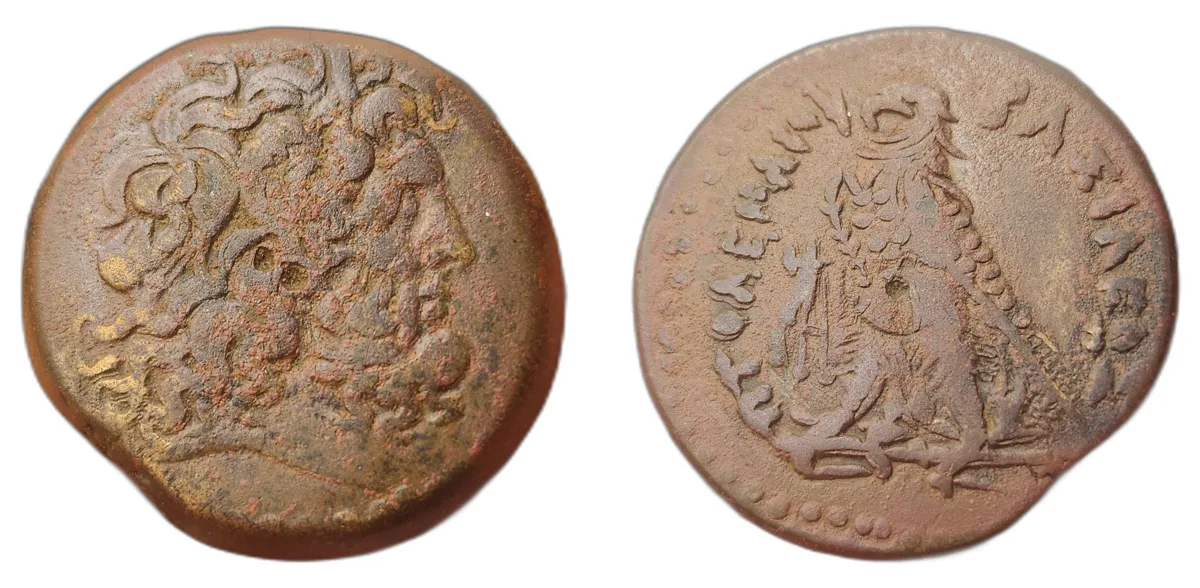
Ptolemy IV Philopator - 36.18 g AE 34 - Tetrobol
Sold by NathanielsCreativeCollections
$250.00
Description
Ptolemaic Egypt produced some of the largest bronze coins ever struck in antiquity. Under the Ptolemies, bronze denominations reached sizes far beyond anything typical of the Greek or later Roman world, with their largest issues weighing well over 100 grams. These impressive bronzes functioned as high-value currency within Egypt's closed monetary system, while smaller denominations such as this tetrobol provided an important medium for everyday commerce throughout the kingdom.
This tetrobol was struck at Alexandria between 221 and 204 BC under Ptolemy IV Philopator, whose reign saw Egypt successfully repel the Seleucid Empire at the Battle of Raphia despite the kingdom's growing internal decline. The obverse depicts the diademed head of Zeus Ammon facing right, the syncretic ram-horned form of Zeus identified with the Egyptian god Ammon and an enduring symbol of Ptolemaic divine legitimacy. The reverse features an eagle standing left on a thunderbolt with its head turned left and wings closed, accompanied by a cornucopia in the left field and the control mark ΔI between the eagle's legs, together with the Greek inscription ΒΑΣΙΛΕΩΣ ΠΤΟΛΕΜΑΙΟΥ ("of King Ptolemy"). It is catalogued as Svoronos 1127 and SNG Copenhagen 201–202.
Obverse: Diademed head of Zeus Ammon right
Reverse: ΒΑΣΙΛΕΩΣ ΠΤΟΛΕΜΑΙΟΥ ("of King Ptolemy"), eagle standing left on thunderbolt, head left, wings closed; cornucopia in left field, ΔI between legs
Catalogues: Svoronos 1127; SNG Copenhagen 201–202
Mint Info: Alexandria, 221–204 BC
Mass: 36.18 g
Diameter: 34 mm