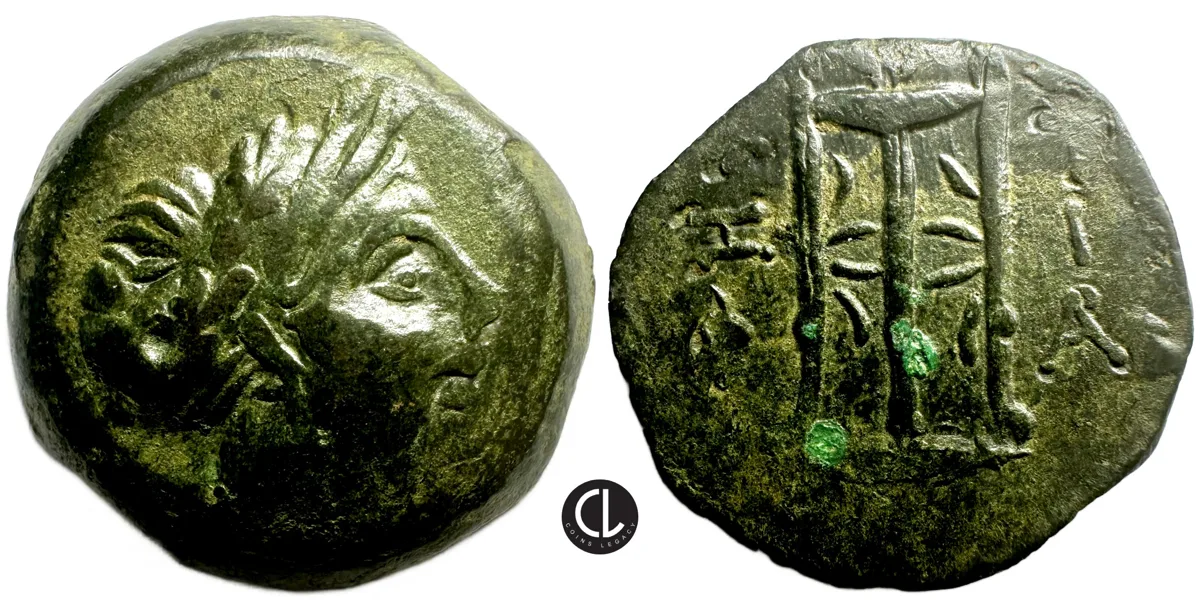
Mysia, Kyzikos, AE, Circa 300-200 BC
Sold by CoinsLegacy
$180.00
Description
Mysia, Kyzikos, AE (bronze,15.73g,25mm), 300-200 BC
Obv: Head of Kore Soteira left, hair in sphendone covered with a veil, wearing wreath of grain ears
Rev: K-Y/Z-I across fields, Tripod; grape to the left and tunny fish below
Ref: SNG von Aulock 1227; SNG Paris 443-5 var
Rarity/Choice: Scarce with grape, VF
Note: Kyzikos, an ancient city located in the region of Mysia (in present-day Turkey). Kore Soteira, a title bestowed upon the goddess Persephone in ancient Greek religion and mythology, combines "Kore," meaning "maiden" or "girl," with "Soteira," signifying "savior" or "deliverer." This designation translates to "Maiden Savior" or "Maiden Deliverer." Persephone, daughter of Zeus, the king of the gods, and Demeter, goddess of agriculture and fertility, held dual roles as the Queen of the Underworld, having been abducted by Hades, god of the underworld, to become his wife. Persephone's abduction marked a significant mythological event that elucidated the changing seasons: her mother's grief, Demeter, during the winter months, rendered the earth barren. The title Kore Soteira underscores Persephone's multifaceted nature, representing both her youthful innocence as a maiden and her divine authority as a goddess capable of bestowing salvation. This duality underscores her pivotal role in the cycle of life, death, and rebirth, symbolizing the interconnectedness of nature and fertility.