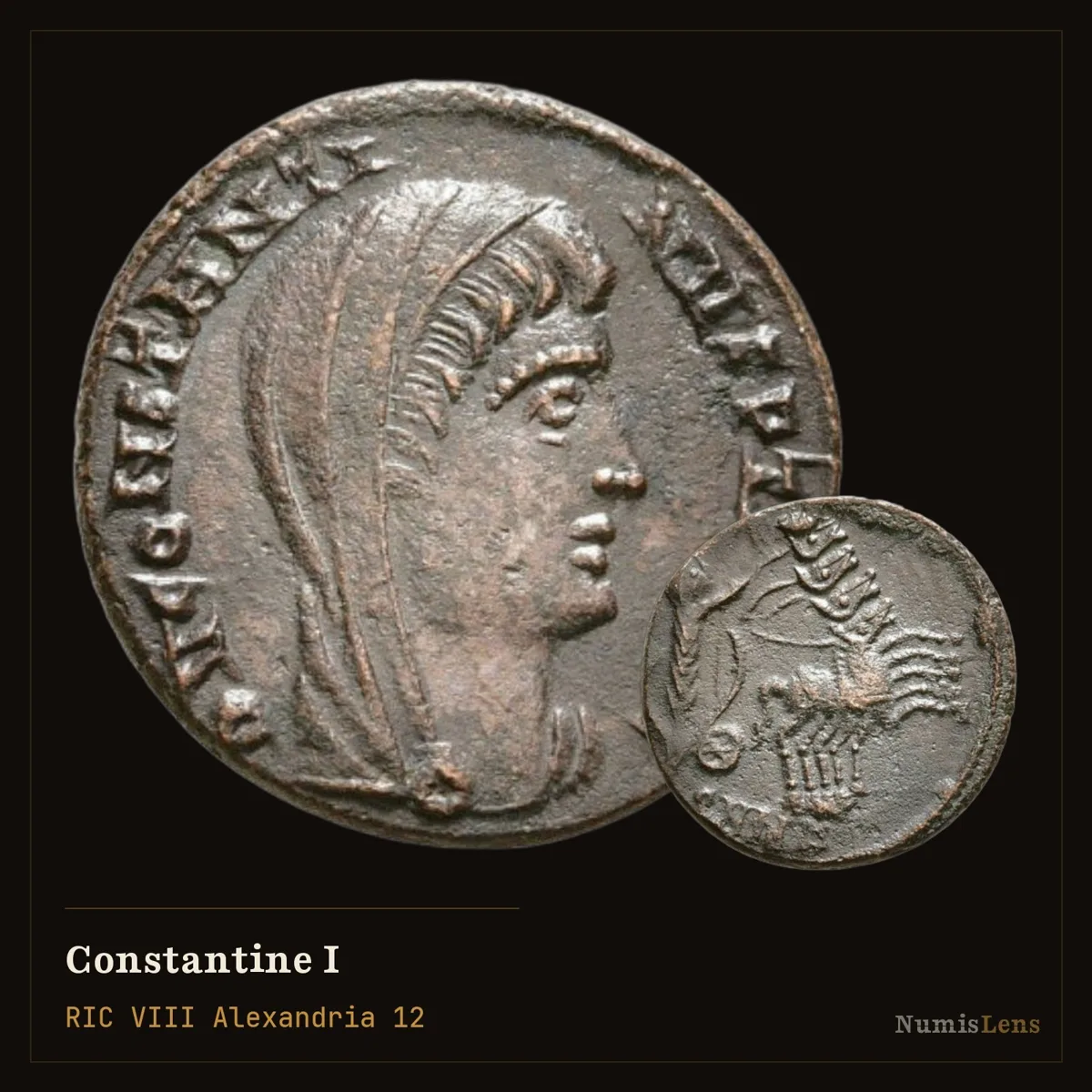
Constantine I — Nummus, Quadriga & Hand of God, Alexandria
Sold by Numis-Lens
Description
Struck at Alexandria between AD 337 and 340, this small bronze belongs to the commemorative coinage that Constantine the Great's three sons issued after his death in May 337. The obverse legend reads DV CONSTANTINVS PT AVGG — Divus Constantinus, Pater Augustorum, "the Deified Constantine, Father of the Emperors" — and the veiled head is his own. RIC assigns the issue to Constantius II, who by then held Egypt and the eastern provinces; the coin is a son's tribute to his father, and a statement that the dynasty's authority descended from him.
The reverse carries no legend, only the scene: Constantine, veiled and draped, driving a galloping quadriga to the right, with the Hand of God reaching down from above to receive him. It is the old Roman consecratio — the deified emperor's chariot ride into the heavens — rebuilt around a Christian idea. Where earlier apotheosis coinage sent the emperor up on an eagle or from a flaming altar, here a single divine hand comes down to take him, and no pagan deity appears at all. The motif is among the first unambiguously Christian images in the Roman imperial series, struck within three years of the first Christian emperor's death.
Attribution: RIC VIII Alexandria 12Mint: AlexandriaWeight: 1.66 gDiameter: 15 mmCatalogued in the NumisLens cabinet — NL-MK247-JJKKA
Combined shipping is available — buy more than one coin and pay a single shipping charge.Attribution is believed to be correct, but ancient coin attributions can vary and the catalogue reference may be subject to revision.