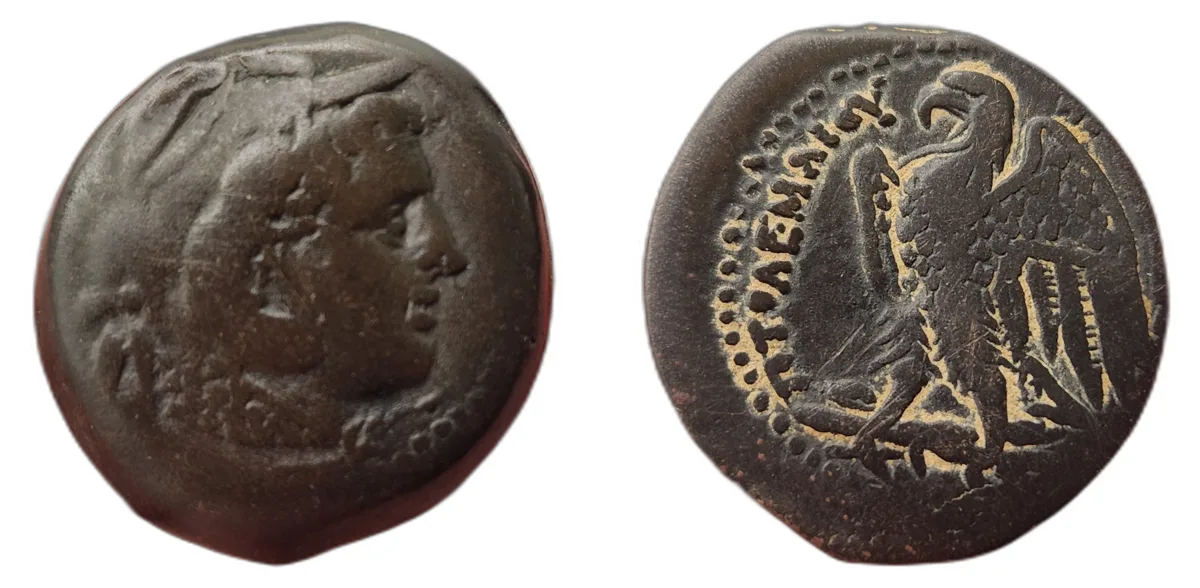
Ptolemy V Epiphanes - 12.36 g AE 24 - 40 Units
Sold by NathanielsCreativeCollections
$100.00
Description
Ptolemaic Egypt is best known for its massive bronze issues, some of the largest coins struck anywhere in antiquity, but the same system also produced a full range of smaller fractional denominations for everyday circulation. This piece represents that practical end of the spectrum: a compact, easily handled coin meant for smaller transactions within Egypt's closed monetary economy, standing in contrast to the palm-sized showpieces the dynasty is most famous for.
This bronze was struck at Alexandria between 204 and 180 BC, under the reign of Ptolemy V Epiphanes, who came to the throne as a child amid the turmoil of the Fifth Syrian War and whose Memphis decree of 196 BC survives today as the Rosetta Stone. The obverse depicts the head of Alexander the Great facing right, wearing an elephant skin headdress, rendered here in fine style engraving that evokes his conquests in the East and ties the Ptolemaic dynasty to his legacy. The reverse shows an eagle standing left on a thunderbolt, its head turned left with wings open, with no accompanying field symbol or legend between its legs, alongside the Greek inscription ΠΤΟΛΕΜΑΙΟΥ ΒΑΣΙΛΕΩΣ ("of King Ptolemy"). It is catalogued as Svoronos 1236 (= Svoronos 1495) and SNG Copenhagen 247–248.
Obverse: Head of Alexander the Great right, wearing elephant skin headdress, fine style engraving
Reverse: Eagle standing left on thunderbolt, head left, wings open, no field symbol, nothing between legs
Catalogues: Svoronos 1236 (= Svoronos 1495), SNG Copenhagen 247-248
Mint Info: Alexandria, 204-180 BC
Mass: 12.36 g
Diameter: 24 mm