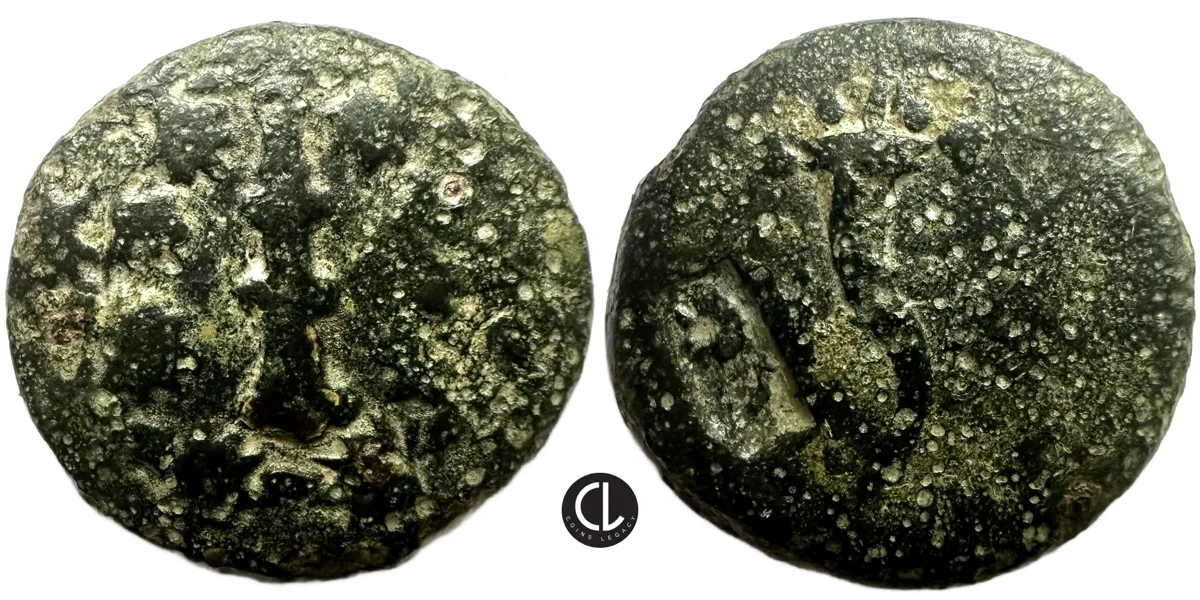
Cilicia, Tarsos (as Antiocheia ad Kydnum), Temp. of Antiochos IV of Syria, AE Circa 175-164 BC - RRR
Sold by CoinsLegacy
$135.00
Description
Greek, Cilicia, Tarsos as Antiocheia ad Kydnum, Temp. of Antiochos IV of Syria, AE (bronze, 7.9g, 21.2mm), Circa 175-164 BC
Obv: Club within oak-wreath
Rev: cornucopia, flanked by two monograms and countermark
Ref: SNG Levante Supp. 249; cf. CNG E.A. 310 lot 118
Rarity/Choice: Rare (with countermark), aVF ( somewhat porous otherwise nicely centered on broad flan)
Note: Tarsus was an important city in ancient Cilicia, known for its strategic location and its role as a center of trade and culture. Its coins, like those of other ancient cities, provide valuable insights into its history, beliefs, and economic activities. The club is a symbol often associated with Hercules (Herakles), the mythical hero. The oak wreath symbolizes victory and honor, and it's often associated with military achievements. The cornucopia, also known as the "horn of plenty," is a symbol of abundance and prosperity. It's depicted overflowing with fruits and vegetables, symbolizing the wealth and fertility of the region. Coins like these were used for daily transactions in Tarsus and surrounding areas. The imagery on the coin reflects the city's prosperity and connection to both Greek mythology.