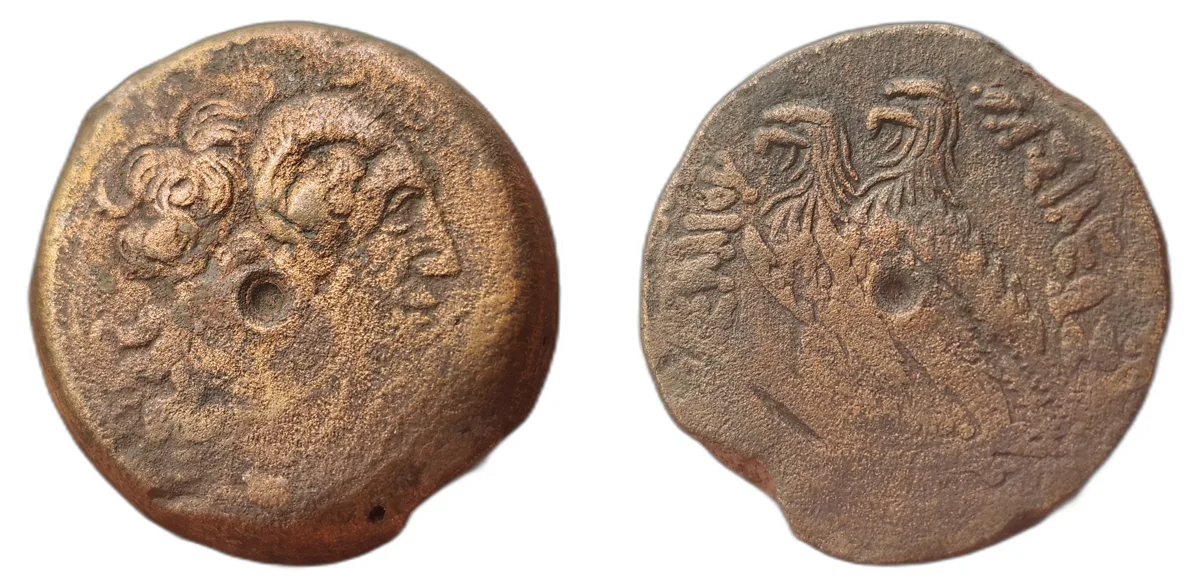
Ptolemy IX Soter II or Ptolemy X Alexander I - 37.53 g AE 35 - tentative
Sold by NathanielsCreativeCollections
Description
Ptolemaic Egypt produced some of the largest bronze coins ever struck in antiquity. These massive issues were a distinctive feature of the Ptolemaic monetary system, where large bronze denominations served as practical, high-value currency within Egypt's relatively closed monetary economy. Their substantial size and weight allowed them to function as important units of value within the kingdom's internal monetary system.
This large bronze is tentatively attributed to Alexandria circa 113–81 BC, during a period in which the throne passed between Ptolemy IX Soter II and Ptolemy X Alexander I amid disputed succession and periods of shared and competing rule. The obverse depicts the diademed head of Zeus-Ammon facing right, with the large Ammon horn rising above the forehead, linking Ptolemaic kingship with the divine authority of the syncretic Greek-Egyptian deity. The reverse shows two eagles standing left on a thunderbolt with heads left and wings closed, but notably lacks both a field symbol and the cornucopia normally associated with the type. The inscription ΠΤΟΛΕΜΑΙΟΥ ΒΑΣΙΛΕΩΣ ("of King Ptolemy") identifies the issuing authority. The absence of the cornucopia represents an unrecorded variant, making the identification tentative. It is compared with Svoronos 1423 variants 2 or 3 and SNG Copenhagen 315.
Obverse: Diademed head of Zeus-Ammon right, large Ammon horn rising above the forehead
Reverse: Two eagles standing left on thunderbolt, heads left, wings closed; no symbol in field; cornucopia absent; no symbol between legs; ΠΤΟΛΕΜΑΙΟΥ ΒΑΣΙΛΕΩΣ ("of King Ptolemy")
Catalogues: Cf. Svoronos 1423 variant 2 or 3 (unrecorded no-cornucopia variant); Cf. SNG Copenhagen 315
Mint Info: Alexandria, circa 113–81 BC (tentative)
Mass: 37.53 g
Diameter: 35 mm