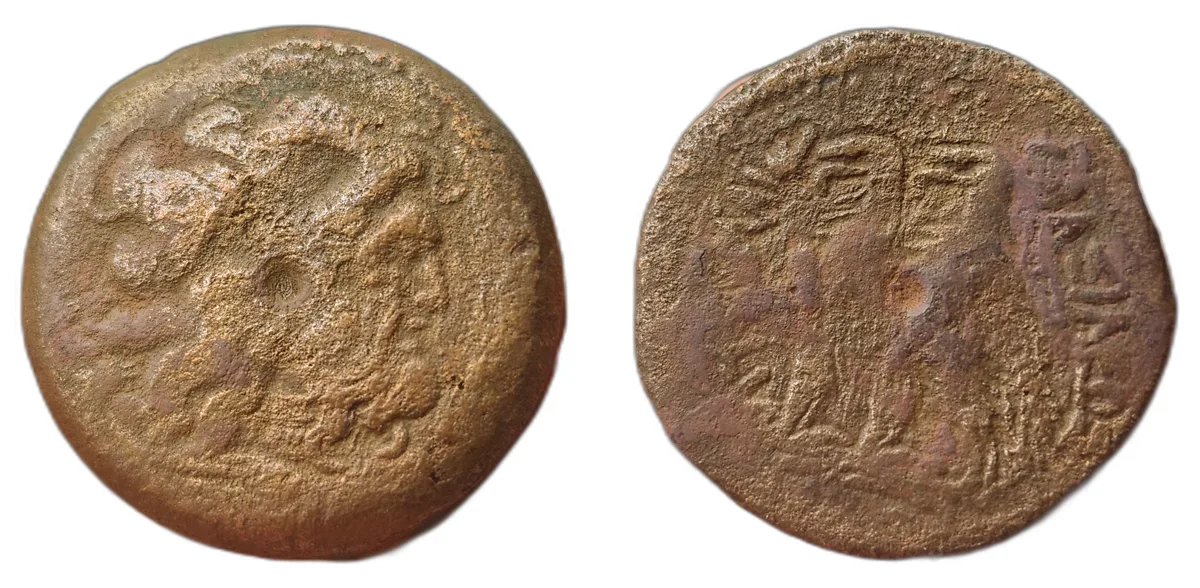
Ptolemy IX Soter II or Ptolemy X Alexander I - 35.92 g AE 34 - 100 Units
Sold by NathanielsCreativeCollections
Description
Ptolemaic Egypt produced some of the largest bronze coins ever struck in antiquity. These massive issues were a distinctive feature of the Ptolemaic monetary system, where large bronze denominations served as practical, high-value currency within Egypt's relatively closed monetary economy. Their great size and weight allowed them to function as substantial units of value while smaller denominations handled everyday transactions.
This 100-unit bronze was struck at Alexandria circa 113–81 BC, during a period in which the throne passed between Ptolemy IX Soter II and Ptolemy X Alexander I amid disputed succession and periods of shared and competing rule. The obverse depicts the diademed head of Zeus-Ammon facing right, with the large Ammon horn rising above the forehead, linking the Ptolemaic ruler to the divine authority of the Egyptian Amun-Zeus. The reverse shows two eagles standing left on a thunderbolt with closed wings and no mark between their legs, accompanied by the inscription ΒΑΣΙΛΕΩΣ ΠΤΟΛΕΜΑΙΟΥ ("of King Ptolemy"). The long production period and shared type make a definitive attribution between the two rulers uncertain. It is catalogued as Svoronos 1423 variant 1 and SNG Copenhagen 315.
Obverse: Diademed head of Zeus-Ammon right, large Ammon horn rising above the forehead
Reverse: Two eagles standing left on thunderbolt, heads left, wings closed; ΒΑΣΙΛΕΩΣ ΠΤΟΛΕΜΑΙΟΥ ("of King Ptolemy")
Catalogues: Svoronos 1423 variant 1; SNG Copenhagen 315
Mint Info: Alexandria, circa 113–81 BC
Mass: 35.92 g
Diameter: 33.9 mm