Elymais Drachm — Phraates — Artemis
Sold by NathanielsCreativeCollections
Description
Kings of Elymais
Ruler: Phraates
Period: Early to mid-2nd century AD
Denomination: AE Drachm (3.77 g; 15.5 mm)
Mint: Susa
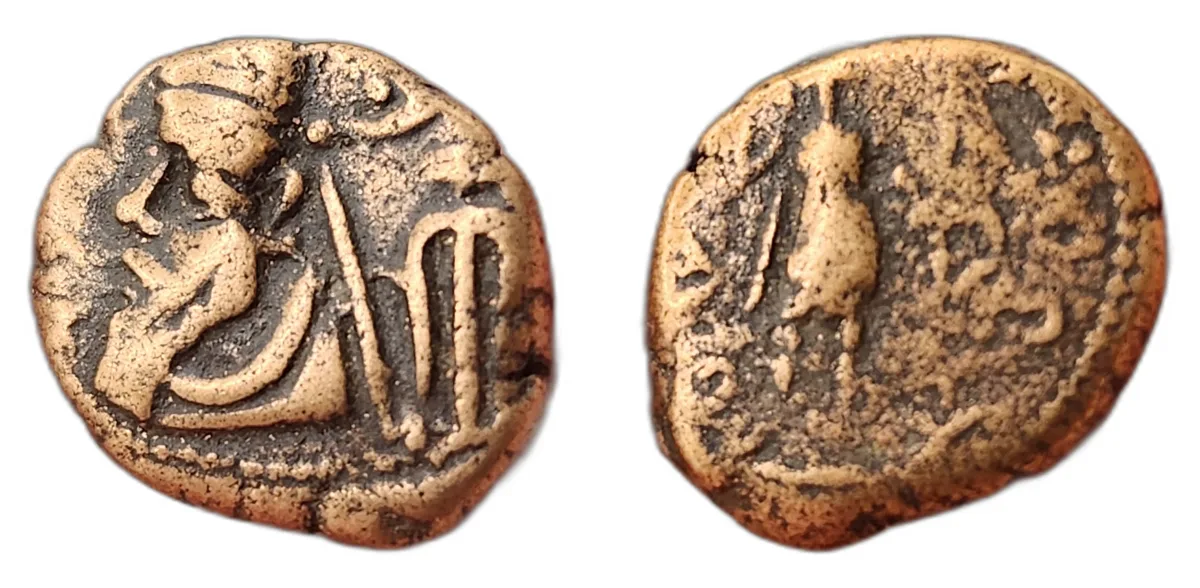
Obverse: Diademed bust of Phraates left, wearing tiara with pellet-in-crescent; to right, pellet-in-crescent above inverted anchor with single crossbar
Reverse: Artemis standing right, drawing an arrow from her quiver and holding a bow
Numismatic Type: Van't Haaff Type 14.6.1-2a
Elymais was an ancient Iranian kingdom centered around Susa in southwestern Iran. Situated at the crossroads of the Iranian plateau, Mesopotamia, and the Hellenistic world, Elymais developed a distinctive culture that combined older Elamite and Iranian traditions with strong Hellenistic and Parthian influences. Although much less famous than Rome, Greece, or Byzantium, the kingdom's coinage offers a fascinating glimpse into a regional civilization that maintained its own rulers and artistic traditions within the wider political world of the Parthian East.
Phraates ruled Elymais during the early to mid-2nd century AD, a period in which the kingdom existed within the broader political sphere of the Arsacid Parthian Empire. As with many Elymaean kings, relatively little is known about Phraates from surviving literary sources, making his coinage especially important for understanding the royal imagery and political identity of his reign. The recurring star, crescent, and anchor symbolism associated with Elymaean kingship appears prominently on his coinage.
This bronze drachm features the diademed bust of Phraates facing left and wearing a tiara decorated with a pellet-in-crescent motif. To the right of the portrait appears another pellet-in-crescent above an inverted anchor with a single crossbar, one of the distinctive symbols of Elymaean coinage. The reverse depicts Artemis standing right, drawing an arrow from her quiver while holding her bow. This dynamic hunting image is a particularly vivid example of the Hellenistic artistic influence present in Elymaean coinage. The coin is attributed to Van't Haaff Type 14.6.1-2a.